How OS-Level AI Agents Will Fundamentally Change Enterprise App Behaviour?
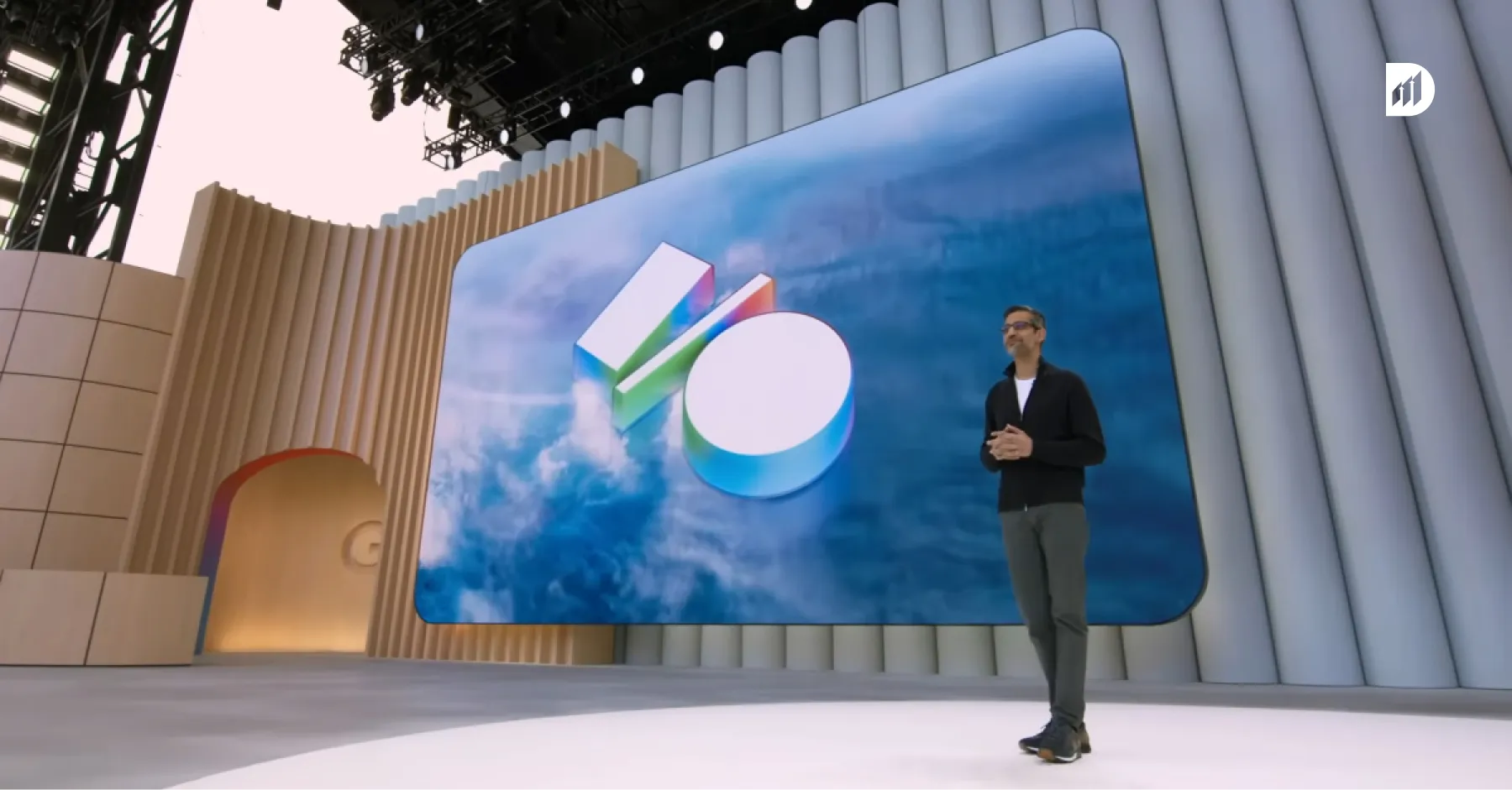
Most enterprise applications share one unspoken assumption. A human being will navigate menus, click buttons, switch between tabs, and manually trigger every workflow step. That assumption has quietly powered three decades of enterprise software design. Sundar Pichai’s unveiling of Gemini Intelligence at Google I/O 2026 has made it obsolete. Gemini is an agentic AI layer embedded directly into Android, ChromeOS, Wear OS, and Android Auto at the operating system level.
OS-level AI agents do not operate inside your applications. They operate above them, orchestrating actions, interpreting intent, and executing across your entire software stack on behalf of the user. For enterprise technology leaders looking to build enterprise AI agents, this is not a product update. It is a structural shift in how enterprises must design, deploy, and evaluate their software.
From Manual Navigation to Intent-Based Commands: What Actually Changes
Traditional enterprise applications build everything around affordances, dashboards, dropdowns, search bars, and navigation menus. They require users to already know where a feature lives before they can reach it. Even well-designed systems add a cognitive burden: find the module, locate the feature, execute the action. OS-level AI agents invert this model entirely.
When Gemini Intelligence operates at the OS layer, the user states an intent “Update the delivery status for order #4821 and notify the warehouse team.” The agent then decides which applications to open and which actions to trigger. The user does not touch a single interface element. Navigation becomes invisible. For enterprise deployments, the operational implications are immediate. New employee onboarding time shrinks when staff no longer need weeks of interface training. They simply describe what they need in plain language. In turn, field workers, multilingual teams, and non-technical staff can interact with complex back-office systems without barriers.
For development teams, this shift reorders design priorities. User interface polish becomes secondary. Intent handling, context awareness, and clean API design become the primary considerations for every new enterprise application.
AI Agents as Intelligent Middleware: Dissolving the Integration Backlog
Enterprise integration remains one of the most expensive and persistent problems in technology operations. Connecting a CRM to an ERP, syncing an HRMS with payroll, or linking a ticketing platform to an analytics dashboard each one requires custom development and ongoing maintenance. Each also needs dedicated monitoring. A mid-sized enterprise typically manages dozens of these point-to-point connections, each one a potential failure mode.
OS-level AI agents address this problem at its root. Because Gemini Intelligence operates across the entire OS rather than within any single application, it acts as an intelligent middleware layer. It can coordinate actions across multiple systems at once without needing a formal API integration between them.
Consider a practical enterprise scenario: a regional sales manager asks the agent to prepare a quarterly board review. Today, that task involves pulling reports from a BI tool, copying figures into a presentation, cross-referencing CRM pipeline data, and manually formatting the output. It is a multi-hour process spanning four separate applications. With an OS-level agent, that entire chain runs on its own. The agent finds which applications hold the relevant data, pulls it, combines it, and produces a draft.
For enterprise architects, this has clear structural implications. Loosely coupled application architectures become more viable, since agents handle inter-application coordination. As a result, integration backlogs shrink as workflows that previously required months of custom software development get handled at the agent layer. Legacy systems that lack modern APIs gain new operational life, because agents can copy user actions when direct API access is not available.
Persistent Context Awareness: Proactive Assistance as a Standard Behaviour
The most significant capability that OS-level agents introduce is persistent context. This is the ability to understand what a user is asking right now, but also what they have been doing. It means knowing what they are working toward and anticipating what they will likely need next.
Traditional enterprise applications are context-blind. Each session begins fresh. Each action exists in isolation. Still, the application has no awareness that the user spent the past thirty minutes reviewing complaint escalations. It does not know three approvals are pending in another system. It has no awareness that the document currently open is due in a client meeting in two hours. An OS-level agent knows all of this, because it runs continuously across every surface of the device.
This enables enterprise application behaviour that has not previously existed: proactive assistance delivered before the user asks for it. A loan officer opening a customer profile at an NBFC receives a risk flag from the credit bureau. That same session surfaces a suggested revised offer too pulled from three systems they never manually opened. A warehouse supervisor opening the logistics dashboard sees an alert for two shipments now delayed by four hours, with a vendor communication already drafted for review. An HR manager starting an appraisal cycle finds performance data, attendance records, and peer feedback already populated from systems that were never formally connected.
The relationship between the enterprise user and their software changes fundamentally. The application stops being a tool the user operates and becomes a system that anticipates operational needs in real time. That shift is already reshaping how enterprises are approaching and building AI-powered applications. Designing for this environment requires enterprise development teams to rethink data architecture and permissions models. They also need to revisit the event-driven triggers that control when and how information surfaces to both the user and the agent layer.
Always-On Workflow Autonomy: Moving Beyond Task Automation
In most enterprise environments, automation depends on human initiation. A manager clicks approve; the workflow advances. A staff member submits a form; the next step begins. The human being serves as the trigger for every process, regardless of whether the decision actually requires human judgment.
OS-level AI agents remove humans from that mechanical triggering role while keeping them in genuine decision-making. This distinction matters. The shift is from task automation handling individual, discrete actions to workflow autonomy. Agents manage entire processes and surface to human attention only when a real decision is needed.
Take a manufacturing context. An agent receives an email invoice and checks it against the purchase order in the ERP. It flags any gaps, routes the approval to the right person, and updates the ledger without a single manual step until the approval checkpoint. At a large enterprise, a new hire triggers IT provisioning, HR document collection, payroll setup, and calendar scheduling across four systems at once. All of this happens before any human coordinator has been notified. At a BFSI firm, the agent monitors transactions against regulatory thresholds and flags anomalies in real time. It prepares compliance reports and escalates to the relevant officer rather than waiting for end-of-day batch cycles.
Research consistently shows that between 60 and 70 percent of enterprise workers’ time goes into administrative friction around decisions. Data gathering, status checking, inter-departmental coordination, and form filling eat at that time not the decisions themselves. Workflow autonomy removes that friction. For enterprise leaders, this translates directly to throughput, accuracy, and cost efficiency. For development teams, it means building applications designed to be run by an agent layer as a core use case, not an afterthought.
Security Architecture for an Agent-Driven Enterprise Environment
The expanded capability of OS-level agents introduces a security surface that every enterprise CTO and CISO must address before any production deployment. An AI agent with OS-level access carries a fundamentally different risk profile than a standard application. It can act across multiple applications on behalf of a user simultaneously. The same capability that lets an agent pull financial data and draft a board presentation could expose sensitive data if misconfigured. It could also open a path for prompt injection attacks. This is not an argument against adopting the technology. It is an argument for approaching it with design discipline from the start.
What Enterprise Applications Need to Get Right on Security?
Enterprise applications built for agent work must implement granular permission scoping. Every action an agent can take requires explicit authorisation, and teams must separate read access, write access, and execution rights by role. An agent working on behalf of a junior analyst must not carry the same permissions as one acting for a CFO.
Every decision, data access event, and action taken by an agent must appear in audit trails. This requires the same rigour applied to human user activity. Specifically, in regulated sectors like banking, insurance, and healthcare, it is a legal requirement, not just a best practice. High-consequence actions, financial approvals above set thresholds, external communications, data exports must require explicit human sign-off before the agent proceeds. Context isolation between sessions is also essential: sensitive context from one user session must not carry over into another.
For organisations in BFSI, healthcare, logistics, and other regulated industries, building agent-compatible enterprise applications without a solid security architecture is a compliance risk. This is where enterprise AI development partnerships with teams that understand both technical architecture and regulatory requirements deliver real risk reduction.
Assessing Agent Readiness in Your Existing Application Portfolio
In practice, most enterprise applications in use today did not account for agent coordination in their design. They lack clean, well-documented APIs that agents can call reliably. Their data outputs often lack structure and clarity. They do not have event-driven architecture that signals state changes to an OS agent layer. They also do not carry semantic labels or metadata that would let an agent understand what data means rather than just what it contains.
This gap will grow more visible over the next 12 to 24 months as OS-level agent capabilities expand across Android and ChromeOS enterprise deployments. OS-level agents can interact with legacy applications at the UI level copying user actions even when proper APIs do not exist. This gives older systems a path forward, but the approach is fragile and hard to maintain at scale. The organisations that will get the most value are those that invest now in checking their application portfolio for agent readiness. They prioritise API modernisation on their enterprise technology roadmap. New systems get built with agent coordination as a core design requirement, not a later addition.
The gap between enterprises that make this architectural investment early and those that wait will be significant. In financial services, logistics, manufacturing, and real estate, Durapid Technologies has delivered AI and cloud transformation programmes across all of these sectors. Organisations that align their software infrastructure to the agent-driven model will operate with measurably greater speed, accuracy, and cost efficiency than those that do not.
The Shift to Task-Centric Software Design: A New Evaluation Framework
The deepest implication of OS-level AI agents is both architectural and conceptual. Enterprise software, for the past three decades, took shape as a set of discrete applications. Each owns a specific domain and maintains its own interface, data model, and user workflow.
The emerging model is task-centric. Users have an outcome to reach. An agent has access to a set of tools, applications, APIs, data sources. It picks, sequences, and calls whatever combination achieves the result, without requiring the user to manage that selection themselves.
In this model, the application is no longer the primary product. It is a capability that an intelligent layer calls when needed. This changes every standard teams use to build and assess enterprise software, especially across systems like enterprise resource planning platforms.
Four Criteria That Now Define Good Enterprise Software
API-first architecture is no longer a development preference. It is a basic requirement for any application that expects to stay relevant. An application that cannot be called programmatically cannot be coordinated by an agent.
Similarly, data semantics and structured labelling matter more than interface design. An agent does not evaluate a dashboard on its visual appeal; it checks whether the data it needs is structured, labelled, and reachable. Modular, composable architectures built around focused applications with clean external interfaces will outperform large platforms that lock data inside closed systems. The primary measure for evaluating enterprise software also shifts from feature count to outcome reliability. When the agent handles the how, the enterprise focuses entirely on whether the capability delivers the business result it exists to provide.
For enterprise technology leaders reviewing their current software investments, every decision should now pass through this lens. Not whether the application is well-designed, but whether its capabilities can be run by an intelligent agent layer to deliver measurable, verifiable business outcomes.
Practical Implementation Steps for an Agent-Ready Enterprise
Organisations that want to position their enterprise software stack for the agent-driven model can begin with a structured sequence of actions. Each step delivers value independently; no complete architecture rebuild is needed upfront.
Start with a portfolio audit. Review every enterprise application currently in use against three criteria. Check whether it exposes reliable APIs, whether teams have structured and labelled its data outputs, and whether it supports event-driven notifications. This audit will typically surface a small set of high-priority systems. Usually these are core platforms like ERP, CRM, and HRMS, the ones that justify modernisation investment first.
Prioritise API modernisation for those high-priority systems. For organisations on Azure, Azure API Management provides governance, versioning, and security controls at the API layer. Direct integration with Azure OpenAI and Databricks handles agent-side intelligence. For AWS deployments, API Gateway combined with Lambda provides equivalent capability. Either path positions your core systems for agent coordination within a realistic delivery timeline.
Build new applications with agent coordination as a core requirement, not a later-stage addition. This means designing data schemas with semantic clarity from the start. It also means implementing event-driven architecture using platforms such as Apache Kafka for real-time state signalling. Teams must also set up granular permission frameworks to govern agent actions at the role and resource level before the first agent goes live.
At Durapid Technologies, our 120+ certified cloud consultants and 95+ Databricks-certified professionals have delivered AI and enterprise modernisation programmes. Our work spans BFSI, logistics, real estate, and manufacturing environments. We approach agent-readiness as a phased programme. We start with an application portfolio assessment and deliver API modernisation and cloud architecture upgrades. Custom AI agent development on Azure and AWS follows within structured timelines.
Prepare Your Enterprise Software for the Agent-First Era
Google’s Gemini Intelligence is in active rollout across Android and ChromeOS, with enterprise implications that will become operationally visible within the next 12 months. The organisations that benefit most are not necessarily the largest. They check their application portfolio now, invest in API-ready architecture, and build new systems with agent coordination as a core design requirement.
Durapid Technologies builds enterprise AI systems, custom software, and cloud solutions with the next phase of the technology cycle in mind. Whether your priority is making existing applications agent-ready or building new systems for OS-level coordination, our team is ready to work with you. If you need to understand what this architectural shift means for your specific industry and regulatory environment, we can help with that too. Contact Durapid Technologies to discuss your enterprise AI readiness assessment.
Frequently Asked Questions
Q: What is an OS-level AI agent and how is it different from a standard AI assistant?
A: An OS-level AI agent works across the entire operating system, not just inside one app. It can access context, trigger actions, and coordinate workflows across multiple applications at the same time without needing separate integrations between them.
Q: Which enterprise applications will be affected first by OS-level AI agents?
A: Systems with heavy manual workflows will see the biggest impact first. That includes ERP, CRM, HRMS, compliance platforms, and invoice processing systems where a lot of time is still spent switching between tools and coordinating repetitive tasks.
Q: How long does it take to make enterprise applications agent-ready?
A: For most enterprise systems, API modernization and agent-readiness typically take around 8 to 16 weeks depending on legacy complexity and infrastructure maturity. Most engagements begin with a short assessment phase before implementation starts.
Q: What are the biggest security risks with OS-level AI agents in regulated industries?
A: The biggest risks include prompt injection attacks, permission misconfigurations, unauthorized data access, and context leakage across sessions. That’s why secure deployments need strict permission controls, audit trails, human approval checkpoints, and strong session isolation.
Q: When is agent-based workflow autonomy NOT the right approach?
A: Full autonomy is not ideal for decisions that legally or operationally require human judgment. Things like regulatory filings, final loan approvals, or contractual commitments should still include a human decision layer. In most cases, the best setup is AI-assisted execution, not fully autonomous execution.

Recent Blog

How GCCs Can Scale Engineering Teams with Staff Augmentation?
October 10, 2026-
Asset Management Software for CFOs: From Depreciation to Capital Planning
September 29, 2026 -
Why Voice AI Is Different From Chatbots in Recruitment?
September 17, 2026