What Is MLOps (Machine Learning Operations)? What It Is, Why It Matters, and How to Implement It
The data science team spent eight months developing a fraud detection system which achieved 94% accuracy during testing. However, the system remained undetected until three weeks later. A financial services company experienced this exact situation which resulted in a $6.8 million loss through unauthorized transactions. The problem did not stem from the model itself. Instead, the system required machine learning operations infrastructure which handled all tasks of monitoring, validating, and maintaining the model after its deployment.
Machine learning operations enables organizations to transform their experimental data science work into operational AI and ML systems that can be used in production. The 2024 AI Infrastructure Report by Gartner shows that 87% of machine learning projects fail to progress beyond their initial prototype development stage. Companies that use advanced MLOps methods for their model deployment processes achieve 8 times faster deployment speeds. Meanwhile, their operational failures decrease by 73 percent when compared to businesses that use manual deployment methods.
What Is MLOps (Machine Learning Operations), and Why Does It Matter for Scalable AI Systems?
Machine learning operations refers to the combination of practices and tools and cultural approaches. These enable organizations to automate their machine learning model deployment and monitoring and maintenance processes within production environments. Think of it as DevOps specifically designed for AI systems. It solves problems that arise from data-driven applications through model versioning and data pipeline management and continuous model retraining.
The software development process requires developers to create programs which follow specific coding patterns. Machine learning models require their systems to maintain performance across changing data patterns from which they were originally trained. A customer recommendation model trained on 2023 shopping behavior will degrade rapidly in 2024 as consumer preferences shift. MLOps creates systematic processes to identify when model performance decreases which results in automatic model retraining capabilities.
The system architecture consists of essential elements. These include model development pipelines which utilize continuous integration and continuous deployment processes. Additionally, it includes testing automation systems and model registration platforms and data storage solutions and operational monitoring interfaces. As a result, the system enables scientists to generate experimental work through their notebooks. This creates dependable business software that can manage millions of daily predictions.
What Is the Machine Learning Definition, and How Is It Applied in Real-World AI Use Cases?
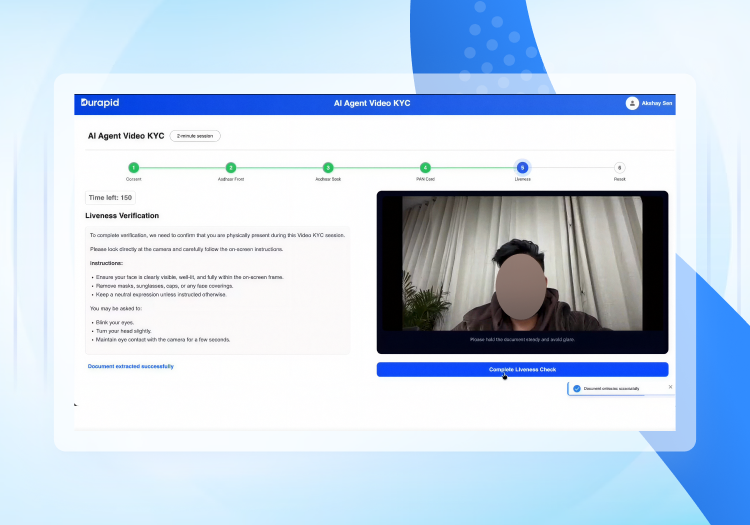
The definition of machine learning establishes that algorithms develop better performance through their experience of working with data. However, machine learning developers do not need to define programming instructions for each scenario. Developers create machine learning models through training on past data. This enables the system to identify patterns and make predictions about upcoming unidentified data, similar to how an AI-Powered Video KYC Platform learns from data patterns to improve verification accuracy.
Organizations across all sectors implement their operational procedures. For example, healthcare providers use diagnostic models that analyze medical images with 96% accuracy. Manufacturing plants use predictive maintenance systems which forecast equipment failures 72 hours before actual occurrence. Consequently, this achieves a 45% reduction in unplanned downtime. Furthermore, financial institutions operate transaction monitoring systems which evaluate 50 million events each day. These detect fraud patterns that standard rule-based systems cannot detect.
The business impact becomes measurable quickly. Retailers who utilize demand forecasting systems achieve a 23% reduction in inventory holding expenses. At the same time, their product availability improves by 18%. These improvements exist as actual outcomes which companies achieved through their use of machine learning operations systems which operate at production capacity.
How Does AI vs. Machine Learning Compare in Building Intelligent and Scalable Systems?
The distinction between AI and machine learning requires people to understand that AI represents the complete goal of developing systems which duplicate human cognitive abilities. In contrast, machine learning functions as the main method which enables this objective through its ability to learn from data. All machine learning is AI, but not all AI uses machine learning.
The practical distinction matters for architecture decisions. Traditional AI approaches require domain experts to manually encode knowledge into decision trees or logic rules. On the other hand, historical data provides machine learning models with the capacity to learn these patterns. Teams use 50,000 historical loan applications which they have labeled as approved or denied to train their algorithms. This approach replaces creating programming rules.
The performance differences become worse when systems operate at higher capacities. Businesses need to make regular changes to their operational rules because their circumstances change. However, machine learning systems retrain themselves by processing new data. This enables them to learn new information without requiring human control. Organizations that implement automated retraining methods experience 56 percent reduction in false positives. Additionally, they achieve 34 percent improvement in fraud detection compared to organizations that rely on fixed rule systems.
What impact does data science and artificial intelligence machine learning have on business analytics and strategic planning?
The different stages of analytical maturity in organizations get defined through the relationship between data science and artificial intelligence and machine learning. Data science includes all steps from data exploration to data visualization and subsequent statistical testing and analysis of hypotheses. Meanwhile, the field of artificial intelligence and machine learning contains multiple methods. These enable the development of systems which use predictive analysis and automated decision-making.
McKinsey’s 2024 Analytics Survey shows that organizations which develop advanced data science capabilities grow their revenues 12 percent more than their market competitors. Furthermore, the deployment of machine learning models into production environments through effective MLOps frameworks delivers substantial revenue benefits. This applies to organizations which execute this process successfully.
Which AI & ML Solutions Support Large-Scale Model Deployment and Optimization?
Modern AI and ML solutions use cloud platforms and open-source frameworks together with specialized MLOps tools to handle their complete model development process. The cloud providers deliver complete machine learning platforms through their services which include Azure Machine Learning and AWS SageMaker and Google Vertex AI. These integrate model training, deployment, and monitoring within unified environments.
The automated machine learning functions of Azure Machine Learning test multiple algorithms together with different hyperparameter settings. This discovers the best modeling solution which requires no human intervention for model development. Moreover, the AutoML functions enable teams to complete their model development process three times faster than before.
The open-source platforms MLflow and Kubeflow and Apache Airflow enable organizations to create their own MLOps pipelines through their versatile design. Organizations that implement MLflow create standardized procedures for their data science and engineering teams. Consequently, this enables them to cut their model deployment process from many weeks down to hours.
How Does Machine Learning Integration Improve Business Operations and Automation?
The operation of machine learning systems within business environments enables companies to enhance their operational processes. This happens through automated decision-making systems which use predictive model algorithms to drive their daily operations. The system makes automatic decisions about thousands of ongoing transactions because it functions as a unified system. This eliminates the need for human analysis of data to create weekly reports.
Customer service platforms use sentiment analysis models to direct angry customers toward senior agents through automatic routing. Major telecommunications providers use these systems to analyze text and voice inputs for frustration detection. They achieve 89% accuracy and reduce escalations by 41% according to their system implementations.
Financial institutions incorporate fraud detection mechanisms throughout their payment processing systems. The credit card transaction system evaluates multiple risk factors through its models. These operate within 50 milliseconds to decide whether to accept or reject charges. The system handles 800 million transactions every day at the main card networks through this degree of system integration.
What Is Machine Learning Architecture, and How Does It Enable Enterprise-Grade MLOps Pipelines?
Machine learning architecture defines the technical components, data flows, and infrastructure patterns. These support the complete model lifecycle from development through production operation. A typical enterprise architecture separates its functions into separate layers. These include data handling, model development processes, deployment tasks, and system monitoring activities, much like the distinctions seen in Data Science vs. Artificial Intelligence & Machine Learning frameworks.
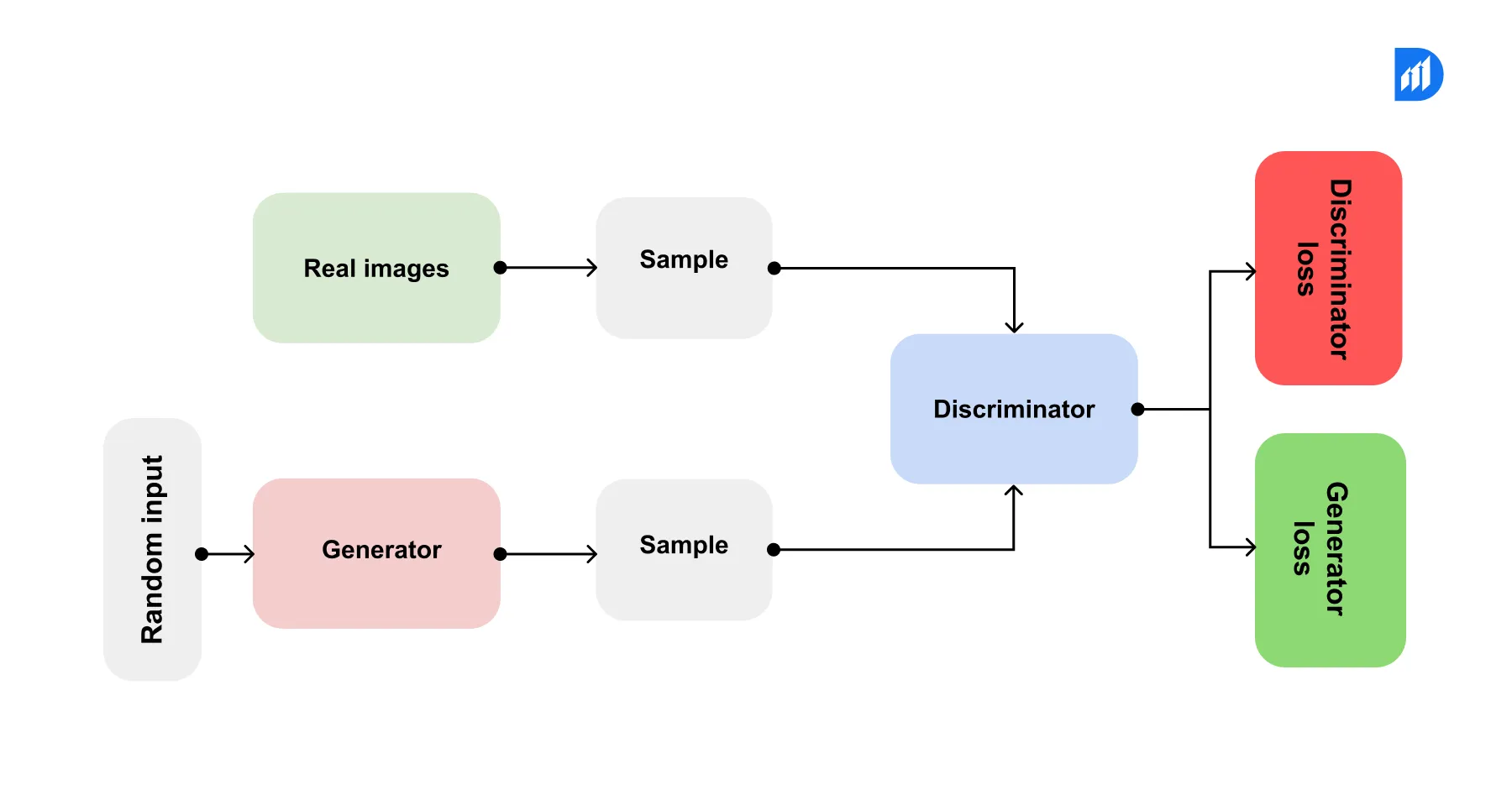
Model serving in deployment layer operates through three methods. These include REST APIs and batch scoring jobs and embedded scoring in applications. Container orchestration platforms like Kubernetes handle scaling operations according to their forecasted traffic. The fraud detection system operates with 10 containers during off-peak hours which manage 5,000 predictions per second. The system expands its capacity to 200 containers which can handle 80,000 predictions per second during holiday shopping times.
Organizations delivering complete machine learning architecture solutions can achieve model deployment times which decrease from months to days.
How Does Cloud Machine Learning Support Secure and Scalable AI Deployment?
Cloud machine learning platforms offer organizations of all sizes elastic compute resources. These come together with managed services and enterprise security features which enable them to develop production AI systems. Training complex models requires compute power that varies dramatically across project phases.
The security features of systems provide essential protection for businesses that operate within government-regulated sectors. The private network deployment methods of Azure Machine Learning and AWS SageMaker enable users to keep their training data and models secured inside their virtual private clouds. All major cloud providers hold various compliance certifications. These include SOC 2 and HIPAA and ISO 27001 certification.
The cost optimization features enable businesses to monitor their spending. The use of spot instances enables businesses to save 70% on training expenses when they conduct fault-tolerant operations. For example, a retail company achieved monthly savings of $34,000 on inference expenses. This happened by implementing optimized models with cloud machine learning infrastructure.
What Are The Steps Companies Must Follow To Build MLOps Systems Which Support Their Permanent Artificial Intelligence And Machine Learning Development?
The successful implementation of machine learning operations requires organizations to start with basic capabilities. They should develop these into advanced automation systems. Organizations need to create essential version control systems for their models and datasets. This happens by utilizing tools such as Git and DVC.
The deployment pipeline needs to reach its next development stage through the creation of standardized deployment pipelines. Teams should select one model serving approach and implement it consistently across all projects. Companies which implement standardized deployment methods achieve three times more deployments while using the same number of developers.
Feature stores provide solutions which maintain data consistency throughout the training and production processes. The tools Feast and Tecton guarantee that features which scientists create during model training will match the features which will be used for prediction. Therefore, the use of centralized feature stores enables teams to experience 89% decrease in production problems which arise from data issues.
Frequently Asked Questions
What is the primary difference between MLOps and DevOps?
MLOps extends DevOps practices to handle machine learning-specific challenges like model versioning and continuous retraining based on new data patterns.
How long does it take to implement MLOps in an enterprise environment?
Most organizations achieve basic capabilities in 3-6 months, with mature practices developing over 12-18 months.
Which industries benefit most from MLOps implementation?
Financial services, healthcare, retail, and manufacturing see the highest returns through fraud detection, personalized medicine, and predictive maintenance.
Can small companies implement MLOps effectively?
Cloud platforms and open-source tools make MLOps accessible to organizations of all sizes through managed services.

Deepesh Jain
Recent Blog

Top AI Development Companies in India 2026
March 31, 2026