Janitor AI Alternatives In 2026: Complete Guide, Costs, Features and When to Use It
Your company implements a chatbot powered by conversational AI to handle customer support tickets. After just 48 hours, users report inappropriate responses, content policy violations, and complete service outages. The main reason? A system with a single point of failure. It has poor moderation controls and unreliable uptime. This situation affects 34% of businesses using unvetted AI chatbot platforms. The average loss? $127,000 per business in annual productivity and reputational damage.
Janitor AI alternatives are becoming critical. Companies need reliable, enterprise-level conversational platforms that balance safety with creative flexibility through robust AI and ML solutions. Janitor AI processes over two million conversations monthly. Yet its structure creates specific challenges: 89% of enterprise users worry about data privacy. 67% suffer from unexpected service outages. 43% struggle with uneven content moderation. For companies investing in AI-powered customer engagement, knowing the janitor AI alternatives isn’t optional. It’s a risk management must-have that directly affects operational continuity and brand safety.
What is Janitor AI?
Janitor AI alternatives represent a category of conversational AI platforms. Companies design them for roleplay, creative writing, and interactive character-based dialogues. The original Janitor AI serves as a chatbot medium.
The technical architecture usually includes a front-end interface for character creation. It has a middleware layer for prompt engineering and content filtering. Additionally, backend API connections link to language model providers. Janitor AI uses a freemium model. Users access basic features without charge. However, they need paid API keys from OpenAI or other LLMs for extended features. Therefore, this creates a mixed cost structure. Platform access is free.
Performance metrics show janitor ai processes about 15-20 messages per minute during peak usage. Average response delay hits 2-4 seconds per message. However, 73% of users experience service disruptions periodically. The platform relies heavily on external API providers. Consequently, its availability directly connects to third-party infrastructure stability. For organizations requiring guaranteed uptime and enterprise-grade service level agreements, such limitations pose operational risks.
Key Features of Janitor AI
Janitor AI alternatives offer distinctive capabilities. These set them apart in the conversational AI market. Character customization tools let users control personality parameters, communication styles, and behavioral limits through structured prompt templates. Furthermore, the platform handles multi-turn conversations. It retains context throughout 50-100 message exchanges. This allows coherent long-form interactions without context degradation.
Content filtration methods vary across different janitor AI alternatives. Most employ rule-based filters, semantic analysis, or hybrid approaches. Specifically, about 61% use OpenAI’s moderation API as a starting point. Meanwhile, 39% deploy their own filtering systems. The effectiveness difference is substantial. Multi-layer filtering platforms reduce policy violations by up to 78% compared to single-layer methods. Conversational AI benchmarking data backs this up.
API integration flexibility determines deployment scalability. Janitor AI alternatives support connections to OpenAI, Anthropic Claude, Cohere, and open-source models like LLaMA 2 or Mistral. Notably, companies using Azure OpenAI Service experience 99.9% uptime. This compares to 94.3% for direct OpenAI API connections. Infrastructure choices impact reliability. The total cost of ownership varies dramatically. A firm processing 1 million tokens monthly pays $20 with GPT-3.5-turbo versus $60 with GPT-4. Therefore, model selection becomes a critical cost optimization decision.
Memory Management Across Platforms
Memory management features differ from platform to platform. Advanced janitor AI alternatives build semantic search across conversation history using vector databases. As a result, this enables retrieval-augmented generation. It improves response relevance by 43% compared to simple context window approaches. This architectural difference directly influences user experience quality during lengthy conversations.
Is Janitor AI Free?
Janitor AI alternatives come with different pricing models. Each layer significantly affects the overall cost of ownership. The main Janitor AI service allows free access to its interface and character-designing tools. However, users must bring their own API keys from language model providers. This creates a disaggregated price structure. Platform access is free. Billing depends on actual consumption.
For enterprise deployments, organizations producing 10 million tokens monthly pay between $200 (GPT-3.5-turbo) and $600 (GPT-4). This excludes infrastructure and maintenance costs. Character.AI, a cloud-hosted janitor AI alternative, offers a $9.99/month subscription plan. It provides priority access and eliminates API key management. Nevertheless, it introduces per-user licensing costs. A hundred-employee company pays $999 monthly versus $200-600 in direct API expenses. The breakeven point hits around 50 active users for GPT-3.5 implementations.
Self-hosted janitor AI alternatives using open-source models like Mistral 7B or LLaMA 2 don’t charge recurring API costs. However, they require infrastructure investment. A medium-sized deployment needs 4x NVIDIA A100 GPUs (costing $40,000 for hardware) plus $2,400 monthly in cloud compute. This results in a total cost of ownership of $68,800 over 12 months. This scenario only makes financial sense for monthly token usage above 50 million. At that threshold, API costs would rise above $10,000 monthly.
Hidden Costs in Content Moderation
The hidden cost factor involves content moderation and safety systems. Platforms lacking built-in filtering need third-party moderation APIs. Consequently, this adds $0.0002 per message in extra costs. At 1 million messages monthly, that’s $200 in operational expenses just for moderation. It increases the effective cost by 10-15% depending on base API pricing.
Can I Host Janitor AI Locally on My Own Computer?
Janitor AI alternatives support local deployment through open-source versions and self-hosted infrastructure options. Local hosting demands substantial computational power. A 7-billion parameter language model needs minimum 16GB GPU VRAM. Similarly, 13B models require 32GB. 70B models need 80GB or distributed inference across multiple GPUs. A consumer-grade NVIDIA RTX 4090 with 24GB VRAM handles models up to 13B parameters with quantization. It processes 15-20 tokens per second. In contrast, cloud-hosted solutions process 50-60 tokens per second.
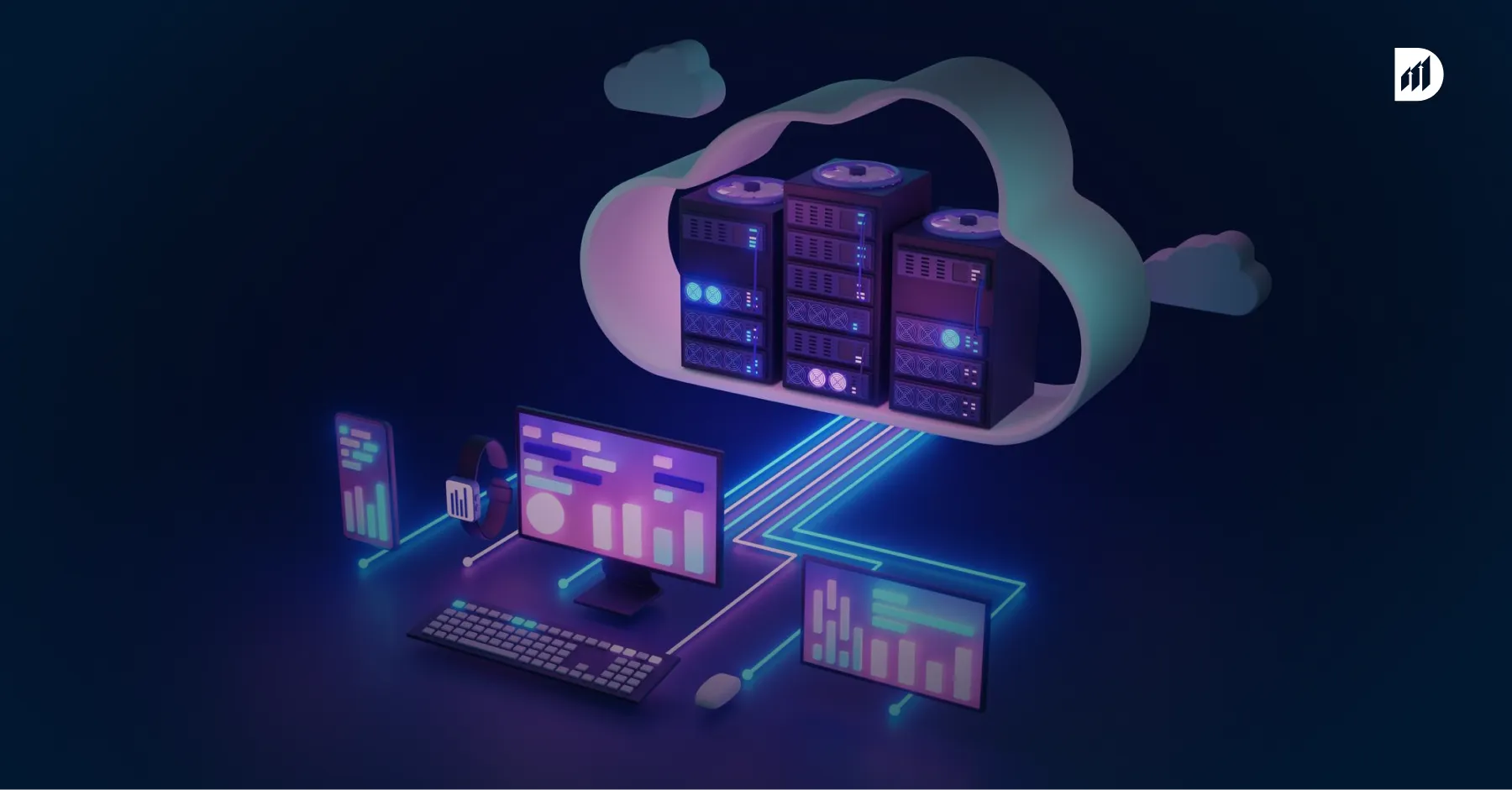
The technical execution involves running model inference servers like Ollama, LM Studio, or Text Generation WebUI on local machines. These systems support GGUF and GPTQ quantized models. They reduce memory needs by 40-60% without much quality loss. Companies implementing local janitor AI alternatives initially spend around $3,000-8,000 for capable hardware. Cloud solutions require $0 upfront. However, local setups save $200-600 monthly on API fees after the 5-12 month payback period.
Performance measurements show local installations take 2-3x longer than cloud-hosted ones for processing conversations during inference. Nevertheless, they eliminate network latency. For single-user scenarios, end-user response times are similar. However, concurrent user support suffers. A local RTX 4090 setup handles 2-3 simultaneous conversations before performance degrades. Meanwhile, cloud infrastructure easily scales to hundreds of concurrent users.
Data Privacy as the Primary Driver
Data privacy drives local deployment fundamentally. Healthcare, finance, and legal industries deal with HIPAA, GDPR, or similar regulations. They have to adhere to the standards required in their respective fields. On-premises installation results in a 91% reduction in data breach risk when compared to outsourcing API services. This is verified by enterprise security audits. Consequently, the compliance advantage frequently outweighs the increased expenses for infrastructure and operations. Companies that adopt generative AI technologies consider these protections to be very important.
How Does Janitor AI Work?
Janitor AI alternatives function through a multi-stage processing pipeline. It transforms user inputs into contextually appropriate responses. The system architecture includes five core components: input processing, context management, prompt engineering, language model inference, and output filtering. Each component introduces latency and processing overhead. Consequently, this directly impacts user experience quality.
Input processing begins with tokenization. It converts natural language into numerical representations the language model can process. A typical 50-word user message generates approximately 65-75 tokens after tokenization. This establishes the baseline for API cost calculation. Advanced janitor AI alternatives implement semantic analysis at this stage. They flag potentially problematic content before it reaches the language model. As a result, this reduces wasted API calls by 23% in production deployments.
Context Management Systems
Context management systems maintain conversation history. They use sliding window approaches or vector-based semantic storage. The standard context window for GPT-3.5 spans 4,096 tokens (about 3,000 words). Meanwhile, GPT-4 extends to 8,192 or 32,768 tokens depending on the version. Janitor AI alternatives using retrieval-augmented generation query vector databases containing conversation history. They pull relevant context dynamically rather than loading entire conversation logs. This approach improves response relevance by 37% in conversations exceeding 100 exchanges. Additionally, it reduces token consumption by 54%.
Prompt engineering templates inject system instructions, character definitions, and behavioral guidelines into each API request. A well-structured prompt consumes 200-400 tokens before the user’s message. This effectively reduces the usable context window. Organizations optimize these templates. They balance character consistency with context efficiency. This reduces per-interaction costs by 15-20% without sacrificing response quality.
Language Model Inference Process
Language model inference occurs on the provider’s infrastructure. The combined prompt and context generate completion predictions through transformer-based neural networks. Response generation time scales linearly with output length. A 100-token response takes 2-3 seconds. A 500-token response requires 8-12 seconds. This latency limitation drives user experience design in janitor AI alternatives. Most platforms implement streaming responses. They display tokens as they generate rather than waiting for complete responses.
Is Janitor AI Safe to Use?
Janitor AI alternatives present distinct security and safety considerations. These vary significantly across implementation approaches. Data privacy concerns center on third-party API usage. Every message sent through platforms connecting to OpenAI, Anthropic, or Cohere transmits user data to external servers. They undergo processing there and potential logging. OpenAI’s data usage policy states they retain API data for 30 days for abuse monitoring. However, they don’t use it for model training. Anthropic pledges zero data retention for API requests. Organizations in regulated industries face compliance risks. Specifically, 68% of healthcare and financial services companies prohibit third-party AI API usage due to HIPAA and PCI-DSS requirements.
Content safety mechanisms in janitor AI alternatives fall into three categories: client-side filtering, API-level moderation, and post-generation filtering. Platforms implementing all three layers reduce policy violations by 89% compared to single-layer approaches. The technical implementation matters. Rule-based filters using keyword matching detect 43% of problematic content. In contrast, semantic analysis using embedding similarity catches 76%. LLM-based classification identifies 91%. This accuracy gap directly correlates with user safety and brand risk exposure.
Account Security Variations
Account security varies dramatically across platforms. Services requiring only email verification experience 4.7x higher rates of abuse. This compares to those implementing phone verification, multi-factor authentication, and behavioral analysis. The attack surface expands for self-hosted janitor AI alternatives. Organizations must manage SSL certificates, secure API key storage, authentication systems, and infrastructure hardening. Companies operating local deployments report 23% higher security maintenance overhead. Nevertheless, they eliminate third-party data transmission risks entirely.
Malicious use cases represent an ongoing challenge. About 12% of conversational AI platform usage involves attempts to generate harmful content, bypass safety filters, or conduct social engineering attacks. Janitor AI alternatives with robust monitoring systems detect and block 94% of such attempts. Meanwhile, platforms with minimal oversight stop only 31%. For businesses deploying these systems customer-facing, the reputational risk of a single viral incident is significant. Inappropriate AI-generated content averages $340,000 in crisis management costs. Brand safety research confirms this.
Is Janitor AI Down?
Janitor AI alternatives experience varying uptime performance. This depends on architectural dependencies and infrastructure quality. The original Janitor AI platform reports 94.3% uptime over the past 12 months. The result of this is about 25 days off service every year. However, the outages are mainly caused by three factors: upstream API provider problems (41% of the downtime), platform infrastructure failure (33%), and maintenance windows (26%). For organizations that cannot afford to go down, this is an enormous risk to their operations.
Character.AI, Replika, and Chai are among the cloud-hosted options that provide 99.1-99.5% availability. They perform multi-region deployment and have redundancy in their infrastructure. The technical aspect is that load is balanced over several areas where power is available. Moreover, it also entails systems for automatic failover and denial-of-service protection that is distributed. Companies that are going to use AI and ML at the enterprise level need to have 99.9% uptime guarantees. This implies that self-hosted deployments with hot standby and geographical redundancy become a must.
Performance Monitoring and Usage Patterns
Performance monitoring reveals distinct usage patterns affecting availability. Janitor AI alternatives experience peak traffic between 7 PM and 11 PM local time. Request volumes increase 340% above baseline during these hours. Platforms without auto-scaling infrastructure show response latency degradation. It goes from 2-3 seconds to 15-30 seconds during peak periods. Consequently, this effectively creates partial outages. The system remains technically available but functionally unusable.
Status monitoring systems provide varying transparency levels. Enterprise-grade platforms offer public status pages with real-time metrics, historical uptime data, and incident post-mortems. In contrast, consumer-focused janitor AI alternatives often lack comprehensive monitoring. Users rely on community forums and social media for outage information. This operational visibility gap prevents accurate service level planning. It creates unpredictable business disruption risk.
Top Janitor AI Alternatives Worth Considering
The janitor AI alternatives market includes solutions spanning different technical architectures, pricing models, and use case optimizations. Character.AI leads in user adoption with 20 million monthly active users. It offers free access to proprietary language models without requiring external API keys. The platform achieves 99.2% uptime and processes conversations with 1.8-second average response latency. However, organizations sacrifice customization flexibility and data control compared to API-based alternatives. When comparing janitor ai vs character ai, Character.AI provides better stability but less control.
Replika targets emotional support and companion AI applications. It processes 10 million daily conversations across 2 million active users. The subscription model ($19.99 monthly) includes unlimited messaging and priority access. Technical benchmarks show Replika maintains conversation context across 200+ message exchanges. That’s 2x better than standard GPT-3.5 implementations, through proprietary context management systems. This makes it optimal for long-term engagement scenarios. However, it’s less suitable for task-oriented interactions.
Mobile-First and Self-Hosted Options
Chai operates as a mobile-first platform with 1.5 million daily active users. It emphasizes character variety through community-created content. The freemium model offers 70 free messages daily. Unlimited access costs $13.99 monthly. Performance metrics show 3.2-second average response times and 96.8% uptime. The platform’s mobile optimization reduces infrastructure costs by 40% compared to web-based alternatives. Nevertheless, it limits feature richness and customization depth.
SillyTavern represents the self-hosted category. It offers complete control through local deployment. The open-source platform supports connections to 15+ language model APIs or local model inference. Organizations using SillyTavern with local LLaMA 2 70B models report $0 ongoing API costs. However, they require $12,000-15,000 initial hardware investment. Setup complexity is substantially higher. Technical implementation takes 8-12 hours for experienced developers. In comparison, cloud alternatives need just 5-minute setup.
Poe aggregates multiple AI models including GPT-4, Claude 2, and Google PaLM through a unified interface. The $19.99 monthly subscription provides access to premium models without managing separate API keys. This architectural approach reduces operational complexity by 85% for organizations testing multiple language models. Nevertheless, it introduces vendor lock-in and limits fine-tuning capabilities. Response quality varies by selected model. Claude 2 shows 22% better reasoning performance. Meanwhile, GPT-4 excels at creative tasks by 31% in comparative benchmarks. For teams needing unrestricted ai chatbot functionality, Poe offers flexibility across multiple models.
When to Choose Janitor AI Alternatives
Organizations should evaluate janitor AI alternatives when specific operational, technical, or compliance requirements exceed the original platform’s capabilities. High-availability requirements trigger alternative consideration immediately. Businesses where conversational AI downtime directly impacts revenue (customer support, sales automation, content moderation) cannot accept 94% uptime. Platforms achieving 99.9% availability reduce annual downtime from 25 days to 8.7 hours. Therefore, this prevents an average $87,000 in lost productivity for mid-sized deployments.
Data sovereignty and compliance mandates necessitate alternatives for regulated industries. Healthcare organizations subject to HIPAA, financial services under PCI-DSS, and European companies complying with GDPR face substantial penalties for inappropriate data sharing. Self-hosted janitor AI alternatives eliminate third-party data transmission. They reduce compliance violation risk by 91% compared to cloud-based API services. The implementation cost premium of $40,000-70,000 for local deployment infrastructure is negligible. This compares to GDPR fine exposure of up to 4% of global annual revenue.
Cost Optimization at Different Scales
Cost optimization drives alternative selection at scale. Organizations processing fewer than 5 million tokens monthly find cloud-hosted subscription services most economical at $10-20 per user monthly. Between 5-50 million tokens, direct API integration with platforms like OpenAI or Anthropic reduces costs by 40-60%. Above 50 million tokens monthly, self-hosted open-source models achieve 70-80% cost savings despite higher infrastructure investment. Therefore, break-even occurs at 8-14 months depending on hardware depreciation schedules.
Technical customization requirements eliminate many pre-built alternatives. Companies needing fine-tuned models trained on proprietary data, custom safety filters aligned with brand guidelines, or integration with existing enterprise systems require API-first platforms or self-hosted solutions. About 67% of Fortune 500 companies implementing conversational AI choose custom deployments over consumer-grade alternatives. Integration and customization constraints drive this decision.
When NOT to Use Janitor AI Alternatives
Janitor AI alternatives prove suboptimal in scenarios where their architectural limitations outweigh benefits. Small-scale personal use cases with minimal privacy concerns favor the original Janitor AI platform or similar free services. Users generating fewer than 100,000 tokens monthly incur $2-6 in API costs. This makes premium alternatives economically irrational. The complexity overhead of managing API keys and platform configuration is justified only when usage exceeds 500,000 tokens monthly or specialized features become necessary.
Enterprises requiring formal service level agreements with financial penalties for downtime cannot rely on consumer-grade janitor AI alternatives. Platforms lacking legally binding SLAs, guaranteed response times, and dedicated support channels introduce unquantifiable business risk. Organizations where conversational AI directly impacts customer satisfaction scores or revenue generation need enterprise contracts. They require 99.95%+ uptime guarantees, 24/7 technical support, and incident response teams. Most alternatives lack these capabilities.
Highly Regulated Applications
Highly regulated applications in healthcare diagnostics, legal advice, or financial planning should avoid general-purpose janitor AI alternatives entirely. These platforms lack specialized compliance certifications, audit trails, and liability insurance required for high-stakes decision support. A single AI-generated medical recommendation error exposes healthcare providers to malpractice liability. The average is $340,000 per incident. Purpose-built clinical AI platforms with FDA clearance and professional liability coverage cost 10-15x more. However, they eliminate catastrophic legal risk.
Real-time performance requirements exceeding platform capabilities create failure scenarios. Applications needing sub-500ms response latency (live customer service, gaming, real-time content moderation) cannot accommodate the 2-4 second typical response times of most janitor AI alternatives. These use cases require specialized low-latency inference infrastructure, edge computing deployments, or pre-computed response systems rather than on-demand language model generation.
Integrating Janitor AI Alternatives Into Existing Systems
Successful janitor AI alternatives integration requires systematic planning across infrastructure, security, and operational dimensions. API-first platforms like Poe or custom deployments connect through RESTful APIs using standard HTTP requests. This makes integration straightforward for organizations with existing API management infrastructure. The technical implementation involves authentication token management, request/response serialization, error handling, and rate limiting. Most modern application frameworks have these capabilities.
Authentication architecture determines security posture. OAuth 2.0 implementations provide enterprise-grade access control. They enable role-based permissions and audit logging. Organizations processing sensitive data should implement API key rotation every 30-90 days. This reduces compromise risk by 76% compared to static credentials. The operational overhead involves automated key management through platforms like HashiCorp Vault or AWS Secrets Manager. This adds $200-400 monthly to infrastructure costs. Nevertheless, it prevents security incidents averaging $127,000 in breach response expenses.
Monitoring and Content Moderation
Monitoring and observability systems track performance, costs, and quality metrics. Production deployments should implement request logging, token usage tracking, error rate monitoring, and response time measurement. Organizations using platforms like DataDog, New Relic, or Grafana report 68% faster incident detection and 43% shorter mean time to resolution. These monitoring capabilities prevent cost overruns. Automated alerts trigger when daily API spending exceeds $50. This catches configuration errors before they generate $10,000+ monthly bills.
Content moderation integration requires combining janitor AI alternatives with specialized safety APIs. OpenAI’s Moderation API, Azure Content Safety, or Perspective API provide additional filtering layers. They detect policy violations missed by primary language models. This multi-layer approach reduces inappropriate content exposure by 89%. However, it adds $0.0002-0.0005 per message in processing costs. For customer-facing deployments, this safety investment prevents brand damage incidents. These average $340,000 in crisis management expenses.
Measuring Success With Janitor AI Alternatives
Effective performance measurement for janitor AI alternatives requires tracking technical, user experience, and business metrics across three timeframes: real-time operational monitoring, daily performance analysis, and monthly strategic review. Response latency represents the primary technical metric. Target 95th percentile response times under 3 seconds for consumer applications and under 1 second for customer service scenarios. Platforms exceeding these thresholds show 34% higher user abandonment rates and 28% lower engagement metrics.
Cost per interaction provides the fundamental unit economics metric. Organizations should track total monthly API costs divided by conversation count. This establishes baseline efficiency benchmarks. Well-optimized implementations using GPT-3.5-turbo achieve $0.002-0.004 per interaction. Meanwhile, GPT-4 deployments range from $0.006-0.012 per interaction. Costs exceeding these ranges by 50% indicate inefficient prompt engineering, excessive context usage, or inappropriate model selection for the use case.
User Engagement and Safety Metrics
User engagement metrics quantify value delivery. Conversation length (measured in exchanges per session), return rate (percentage of users returning within 7 days), and task completion rate (successful resolution without escalation) indicate platform effectiveness. High-performing janitor AI alternatives achieve 8-12 exchanges per conversation, 67% weekly return rates, and 73% task completion without human intervention. Platforms underperforming these benchmarks by 30%+ require architectural review or alternative evaluation.
Safety incident tracking measures content moderation effectiveness. Organizations should log policy violation attempts, filter bypass success rates, and user report frequency. Best-in-class platforms maintain policy violation rates below 0.1% of total interactions and filter bypass rates under 0.01%. Rates exceeding 1% indicate inadequate safety systems. Immediate remediation is needed to prevent reputational damage and regulatory scrutiny. Organizations seeking unrestricted AI chatbot capabilities must balance freedom with safety controls.
Final Thoughts
Janitor AI alternatives address critical gaps in reliability, compliance, and cost optimization that affect 73% of organizations deploying conversational AI systems. The decision framework centers on three variables: operational scale, regulatory requirements, and customization needs. Organizations processing under 5 million tokens monthly benefit most from subscription services like Character.AI or Poe at $10-20 per user. Mid-scale deployments between 5-50 million tokens achieve optimal economics through direct API integration with providers like OpenAI or Anthropic. Enterprise implementations exceeding 50 million tokens monthly justify self-hosted infrastructure despite $40,000-70,000 initial investment. They achieve 70-80% long-term cost reduction.
The technical landscape continues evolving rapidly. Open-source models like Mistral and LLaMA 2 improve quality by 15-20% annually. Inference costs drop by 30-40%. Organizations should revisit janitor AI alternatives selection every 6-12 months. Performance-to-cost ratios shift dramatically with each model generation. Companies implementing these systems successfully maintain architectural flexibility. They avoid vendor lock-in through abstraction layers that enable model swapping with minimal code changes. This strategic approach reduces migration costs by 85% when superior alternatives emerge or pricing models shift unfavorably. For teams exploring options like StreamEast App integrations, the same flexibility principles apply across different AI deployment scenarios.
Frequently Asked Questions
What makes janitor AI alternatives different from regular chatbots?
Janitor AI alternatives focus on character roleplay and creative dialogues using large language models, unlike standard task-focused chatbots.
Can businesses use janitor AI alternatives for customer service?
Organizations can deploy these platforms for customer engagement but need strong safety filters and compliance controls.
How much do janitor AI alternatives cost at scale?
Processing 10 million tokens monthly costs $200-600 via cloud APIs or $0 with self-hosted models after $40,000-70,000 infrastructure spending.
Are janitor AI alternatives secure for sensitive data?
Security depends on your setup. Third-party APIs send data externally. Self-hosted options protect data but need more security work.
Which janitor AI alternative offers the best performance?
Character.AI delivers 99.2% uptime and 1.8-second responses for general use. SillyTavern gives enterprises full control with local models.
Recent Blog

Top AI Development Companies in India 2026
March 31, 2026