How DApps Help BFSI and Healthcare: Key Benefits of Integrating AI
Enterprises in BFSI and healthcare are turning to a dapp development company to build decentralized solutions that address critical gaps in their legacy systems. Financial institutions lose $61 billion annually to compliance failures in the US and Canada alone, while healthcare organizations face an average breach cost of $9.8 million per incident. Traditional centralized systems struggle to handle the growing complexity of data security, patient privacy, and regulatory demands. This is why businesses are exploring blockchain-based applications that offer transparent, tamper-proof infrastructure. The recent dapper development lawsuit has also pushed organizations to think carefully about governance and user data protection when adopting decentralized technologies. With both sectors under intense regulatory pressure, the shift toward dApps isn’t just a technological upgrade but a business necessity.
The maturing of blockchain along with AI leads to a major revolution in the way financial institutions handle transactions and healthcare providers organize patients’ records. Even as discussions around the dapper development lawsuit highlight the growing pains of emerging tech ecosystems, companies that adopt these technologies realize not only the advantages of having their processes automated but also the additional security of the protocols.
As innovation scales responsibly, lessons from cases like the dapper development lawsuit reinforce the need for transparency, compliance, and trust, ensuring that blockchain and AI continue to strengthen data integrity across finance and healthcare.
What Are dApps and Why They Matter for Modern Businesses?
To start with the dapps meaning, one has to see first their major difference with the traditional software. In contrast with the traditional centralized servers, decentralized applications operate on the blockchain networks. This ensures that there is no single point of failure. Users are in complete control of their data. These dApps are different than traditional apps that are under one entity’s control. They use smart contracts that get executed automatically whenever the conditions specified in them are met.
How DApps Address BFSI Pain Points
Dapps have discovered ways to help the Banking, Financial Services and Insurance (BFSI) industry ease their pain points. This technology addressed transaction delays, high costs due to intermediaries, and fraud detection. These are mainly problems for the BFSI companies. Besides, in the year 2024, regulators fined banks $4.5 billion globally for violating protocols related to the fight against financial crime. Traditional compliance systems face serious challenges to manage these situations. On the other hand, blockchain-based dApps give immovable audit trails that make regulatory reporting easier.
The case of cross-border payments is a good example of this. The traditional banking system requires 3-5 business days for international wire transfers. This is a very expensive process with multiple intermediaries each of which takes fees. However, there are blockchain networks that allow the real-time settlement at only 20% of the traditional processing costs. This change in cost directly affects the profit made by the company. At the same time by a quicker service delivery, customer satisfaction is also being increased.
Healthcare’s Critical Need for Decentralization
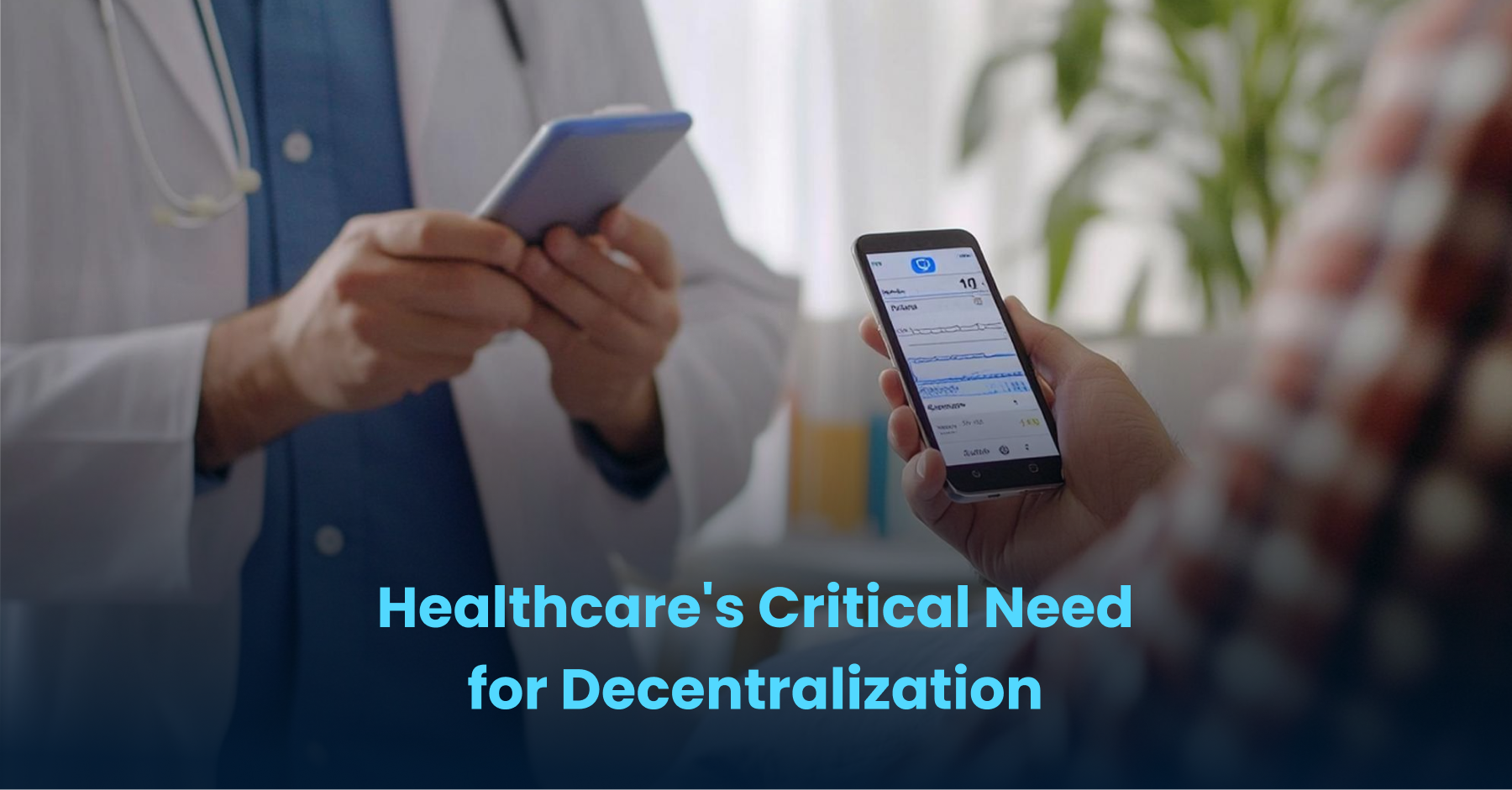
The advantage of decentralization accrues to all the healthcare institutions as a whole. Healthcare still remains the most expensive sector for data security breaches. This is a position that has not changed since 2011. One of the reasons why hackers find it easy to infiltrate centralized databases is the fact that a single server’s compromise can give them access to millions of patients’ records.
A dapp development company that specializes in the healthcare sector employs cryptographic security that makes unauthorized entrance practically impossible. Medical records on the blockchain cannot be altered. At the same time, the patients will have total power over the accessing of their information. Furthermore, the decentralized nature implies that a single attack will not be able to break down an entire network of patient data.
The dapper development lawsuit has enriched the discourse among the issues concerning care of user data and platform governance. Modern enterprises must address these issues. The case involving the Dapper Labs NFT platform has highlighted the necessity of having clear regulatory frameworks. It also shows the need for transparency in operation if decentralized technologies are to be adopted. Cutting-edge organizations take cues from such legal battles to come up with compliant and consumer-friendly solutions.
What Enterprises Get from Professional dApp Development Services?
The partnership with an experienced dapp development services provider results in quantifiable benefits that make the investment worthwhile. Designing and developing enterprise-grade dApps require high-level skills in blockchain protocols, smart contract security, and scalable architecture. Generic software teams do not possess these skills. Thus, the choice of a single development partner affects the success rates of the implementation directly.
Measurable Cost Reductions in Banking Operations
Financial institutions deploy dApps and benefit from shorter settlement times and higher operational efficiency. Smaller banks allocate 11% to 15.5% of their payroll to compliance activities. The largest banks only spend 6% to 10%. Smart contracts do away with manual reconciliation. This is a process that is immensely laborious and prone to errors. Compliance costs can drop by 40%.
Moreover, automated KYC (Know Your Customer) procedure via blockchain brings down the time taken for onboarding of customers from days to hours. Banks can cross-border verify customer’s identities without repeating the process. The validated credentials stay accessible in the network. At the same time, zero-knowledge proofs maintain privacy.
Healthcare Interoperability Solutions
Hospitals and clinics use decentralized systems. This revamps patient outcomes through increased data interoperability. When hospitals, clinics, and specialists operate on a unified blockchain infrastructure, patient data transfers between the doctor and the patient without any compatibility issues. The emergency room staff can check complete medical background immediately. This eliminates dangerous drug interactions and duplicate testing that cost the healthcare system billions of dollars a year.
A leading professional blockchain dapp development company takes care of the intricate technicalities that decide the whole project’s success. They design solutions that work alongside the current IT infrastructure of the enterprise. This doesn’t require complete overhauls of existing infrastructure. This down-to-earth approach reduces the impact of changes on the organization. At the same time it increases their return on investment from being technologically backward.
Security audits are a crucial aspect when you deploy enterprise dApps. The weaknesses in smart contracts have made companies lose millions through hacking and exploiting them. Very skilled dapps developer teams, who are the experts in the field, make use of thorough testing and formal verification. This helps point out the defects that could be there before production deployment. The security measures like multi-signature wallets, time-locked transactions and others shield vital financing and medical data.
| Enterprise Benefit | BFSI Impact | Healthcare Impact |
| Reduced Costs | 30-40% lower transaction fees | 25% reduction in administrative overhead |
| Faster Processing | Real-time settlement vs 3-5 days | Instant record retrieval across networks |
| Enhanced Security | Immutable audit trails | Cryptographic patient data protection |
| Regulatory Compliance | Automated KYC/AML verification | HIPAA-compliant data management |
| Transparency | Full transaction visibility | Complete treatment history tracking |
The table above demonstrates how much organizations can quantify in improvements through the strategic deployment of dApps. Case studies from the many enterprise installations in both industries back these indicators. Hence, the people making the decisions will be able to estimate the realistic ROI timeframes when they pick the decentralized solutions.
Key Features of DApp That Drive Enterprise Adoption
The dApps of the day include different traits that make them stand out when compared to the usual enterprise software. By knowing these traits, the decision-makers will be able to tell if the decentralized solutions are in line with their business goals, especially in a landscape shaped by ongoing industry debates like the dapper development lawsuit. Therefore, organizations will be able to commit as far as technology goes, based on clarity rather than hype. This will depend on the real capabilities and not merely the promises, a distinction that has become increasingly important in light of cases such as the dapper development lawsuit.
Core Technical Capabilities
Decentralization can be regarded as the main feature. There is no single entity that controls the network. This results in the impossibility of censorship. It helps to have uninterrupted service even in cases where some nodes fail. This durability becomes a huge plus for financial services that need 24/7 availability and hospitals that cannot afford to have no power during emergencies.
Smart contracts create the scenario where trust-free automation takes place. This leads to reshaping the business process. These self-operating programs execute exactly as instructed with no chance for tampering or manipulation. Applications of smart contracts in banking are: automatic loan approval on pre-set credit criteria, instant insurance claim payment when the claim conditions get satisfied, and securities settlement via counterparty risk elimination.
Automated insurance verification that lowers claim denial rates is just one of the many areas where healthcare applications come into play. To new drug management systems, making sure that no one gets hurt by doctor’s prescribing mistakes. That type of data monitoring happens through smart contracts. They create a secure and private environment for the clinical trial participants. Hence, their anonymity stays guaranteed and the research timeline for pharmaceutical companies gets reduced.
Privacy and Transparency Balance
Public ledgers usher in a new era of transparency. At the same time they ensure the privacy of transactional data through encryption. One can argue financial auditors are indeed getting verified transaction integrity. The customer’s highly sensitive details remain hidden from them. Just like that, healthcare regulators can stay aware of patient information access patterns without actually knowing the patients. Thus HIPAA compliance happens through technology rather than enforcement of policy alone.
With token economics new business models come up. Organizations can reward people for behaving as they wish. For example, banks give cash backs for making sure that the security measures like multi-factor authentication stay always in place. Healthcare ecosystems pay doctors for revealing and sharing knowing that closing an anonymized patient gets the research done. The two token systems manage to attract and maintain stakeholders’ interest in ways that the traditional methods cannot.
Interoperability is a feature that allows various blockchain networks to interact with each other. This eliminates the data silos that the present enterprise systems suffer from. In other words, a patient’s dental records stored in one blockchain can effortlessly merge with their hospital records stored in a different network. Besides, financial institutions can make settlements of transactions occurring on different blockchain platforms automatically. This cuts down on the risk of settlements and the costs of operations.
Emerging Trends in dApp Development for 2026
The landscape of dapp development company is still changing very fast. New and better things keep coming up. New trends reshape the enterprise implementation during the evolution process. Organizations, which plan to deploy, need to consider these developments in their strategic roadmaps. Therefore, being up to date with technological advances gives one a competitive edge in rapidly changing markets.
Scalability Solutions Reaching Production Readiness
Layer 2 scalability solutions have become a must-have for enterprise dApps that need to process a lot of transactions. These technologies perform transactions outside the main blockchain. They still stay secured by the main blockchain. This enables BFSI applications to process thousands of transactions in a second. The compliance costs for the United Kingdom reached £38.3 billion per year. This indicates the need for a very high operational scale for financial systems. Layer 2 solutions also make such high volume transactions possible on commercial blockchain infrastructures.
Healthcare systems rely on Layer 2 solutions to process millions of updates to patient records while avoiding congested networks. The case of a big hospital network which deals with thousands of daily admissions, discharges, and treatment updates needed a throughput that was economically viable. The first-generation blockchains could not provide that.
AI Integration Creating Intelligent dApps
AI integration is going to be the next hallmark of decentralized application development. Blockchain-based machine learning models analyze transaction patterns in real time. They detect and prevent fraud with much higher accuracy than rule-based systems. Global transaction patterns train the models. Individual transaction details stay private through federated learning techniques.
Healthcare dApps apply artificial intelligence to detect drug interactions. They forecast patient outcomes by looking at similar case histories. They regulate the protocols of treatment while assuring the privacy of the data. Those companies that attract ai app development professionals and at the same time get the blockchain skillset will see considerable competitive advantages through this merging.
Privacy claims that have never been seen before get backed up by zero-knowledge proofs. The banks can assess the creditworthiness of the customer without getting into his/her specific financial details. This keeps the consumer’s privacy intact while also complying with the regulatory standards. The health care institutions can verify the insurance coverage of the patient without disclosing the patient’s identity. This eliminates the need for the currently existing time-consuming administrative processes that cause delays in treatment.
Cross-Chain Interoperability
Cross-chain bridges make it possible for different blockchain communities to move their assets and share data easily and securely. The financial sector no longer stays stuck with a single blockchain vendor. This reduces strategic risks and facilitates hybrid approaches that utilize the strengths of different networks.
Healthcare people can now join different consortiums at once. They don’t need different systems for each of them. This makes it easier for them to communicate and collaborate. The dapper development ecosystem brought to the forefront a number of user experience innovations. These stay required in mainstream dApp adoption. The use of familiar interfaces to mask blockchain difficulty has greatly empowered the non-technical public. They can confidently utilize decentralized systems. The enterprise dApps need to provide robust functionality. This should be closely with intuitive design that does not require much training.
Pros and Cons of Integrating dApps in Healthcare Industry
Healthcare institutions turning towards decentralized apps must consider the massive advantages as well as the challenges that come with it. A genuine evaluation will help in setting up realistic expectations. It will also help in organizing the resources properly for the successful deployment. As a result, these organizations will be able to sidestep the common traps. These usually cause implementations to fail and their budgets for technology to get wasted.
Quantifiable Advantages for Healthcare Systems
Using a cryptographic layer of security to enhance data protection keeps unauthorized persons out. It also prevents alteration of data. On the average, a healthcare data breach lasts for 213 days. This is longer than the 194 days that is the mean duration of discovery in other industries. Blockchain Framework instantly reveals unauthorized access attempts through the consensus process. This very much decreases exposure time.
Smart contracts set the access rules without requiring manual supervision. They automate the patient consent management. Healthcare providers can prove that they comply with the regulations very easily. Unalterable audit trails meet HIPAA requirements and international data protection standards. Regulators have the opportunity of checking compliance through the blockchain itself. They don’t need the organization’s self-reporting.
Interoperability multiplies manifold when the common blockchain infrastructure gets shared by many institutions. The specialists get to see the entire patient history no matter where the last treatment was. The whole view minimizes the risk of missed treatment. At the same time it stops the performing of duplicate tests. This gets indicated as a waste of $750 billion annually in the U.S. healthcare system.
Practical Implementation Challenges
The initial capital expenditures for implementing blockchain technology are higher than those for traditional database systems. This happens due to the need for specialized personnel and the setting up of infrastructure. Healthcare providers need to team up with a proficient dapp development company to stamp out expensive errors during the installation process. Nonetheless, these initial investments commonly bring about positive ROI in 18-24 months. This happens through cost savings in operations.
Transaction volume scalability restrictions affect networks. Even though Layer 2 solutions offer a way of being less affected by this challenge, they still complicate system architecture. Healthcare systems with millions of transactions every day need a network design. This design can keep up with the performance during high loads.
Regulatory uncertainty is a risk that non-risk-taking healthcare administrators don’t want to take. Blockchain technology offers clear benefits in data management. But the regulations surrounding it stay unstable. Mainly those concerning patient privacy and data storage create compliance confusions. Therefore, organizations must liaise with legal teams. This makes sure their implementations are in line with the current and future regulatory requirements.
User Adoption and Training Requirements
User adoption problems arise where medical staff need to get accustomed to new user interfaces and workflows. A successful implementation will involve extensive training and change management programs. The unfamiliarity of the technology can lead to resistance from the staff. They already feel comfortable with existing systems. Thus, a strong leadership commitment gets required to overcome organizational inertia.
How to Begin with DApp Development?
Organizations that want to put their hands into the development of DApps should go ahead by a methodical path. This reduces the risk to the lowest point and, at the same time, allows learning the most. A definite strategy at the start is the best prevention against the usual mistakes. These lead to the failure of implementations and, thus, wasting a lot of money and time. Plus, step-by-step planning allows getting stakeholder’s support. It helps monitor their involvement regarding the progress made through the success metrics defined.
Strategic Planning Phase
First things first, identify the business issues that dApps would solve best as compared to the traditional ones. Do not use blockchain just because your competitors do so, or the technology seems to be innovative. Rather, pinpoint with the help of a measurable approach the main issues in data security, transaction transparency, or process automation. In these areas, the drawbacks of being centralized are obvious and decentralization has all the advantages.
For example, a financial business may be the case where inefficient cross-border payments cost billions in intermediary fees. An organization’s whole process can target this by using dApps. Or in the healthcare sector, outdated patient data interoperability can be a bottleneck. The doctors have to deal with this forcing them to make wrong calls. This causes patients to receive late or no treatment at all.
Be brutally honest when it comes to assessing your organization’s tech readiness. Do you have people with blockchain skills on your staff? Do you have a budget for the training of the existing ones? The collaboration with professionals via Custom Software Development services can shorten project execution time significantly. This is compared to creating internal capabilities from ground up. Also, third-party partners contribute to the avoidance of costly errors. This happens due to their experience spread across various implementations.
Technology Selection and Implementation
Determine the best blockchain platform that suits your needs. Ethereum comes with the largest developer ecosystem and very good tools for smart contract development. Hyperledger Fabric has the advanced features that the enterprise requires. It has the permissioned networks that financial institutions prefer most. These stay subject to regulatory compliance. Each of the platforms to that extent entails different trade-offs regarding decentralization, performance, and regulatory compliance. These should be in line with the organization’s priorities.
A pilot project will be the first step in a process limiting its scope while proving its value. A dapp development services provider might take up a proof of concept for a particular process. This is rather than attempting a complete system upgrade at once. BFSI companies might work on internal settlement processes first before widening the scope. This includes the customer service applications. Patients’ consent to discharge could get managed by a hospital for one department only before rolling out throughout the entire organization. This gets feedback from users to improve the interfaces and workflows.
Security and Compliance Considerations
Security should be the foremost concern from the start. This is not something to deal with afterwards. Smart contracts audits, penetration testing, and formal verification help find the weaknesses before trying to exploit them. Organizations that work with highly sensitive financial or health data cannot afford to treat security as a secondary issue. The costs associated with responding to cyber attacks could reach billions this year. This makes it necessary to invest in security measures proactively.
You should get in touch with the regulatory bodies at the very beginning of the process to safeguard compliance. The industries that people usually consider are BFSI and healthcare which get regulated strictly. Thus, their decision on-built implementation gets influenced by the regulators’ communications. Such proactive communications with the regulators can portray a trustworthy relationship. It perhaps facilitates the development of the policies in support. The BFSI Consulting Services, for instance, can help with the navigation of the complex regulatory landscape. Errors could lead to costly penalties and loss of reputation in this landscape.
Why Partner with Durapid Technologies for dApp Development?
At Durapid Technologies blockchain participation in BFSI and healthcare sectors is one of our specialization areas. Our team consists of more than 95 Databricks-certified professionals and over 150 Microsoft-certified who know well how decentralized applications can fit within already existing enterprise infrastructure. The mix of blockchain expertise and enterprise system knowledge becomes very important for the success of the project.
We have provided the dapp development services for financial institutions that required regulatory compliance. We worked with healthcare organization who deal with very sensitive patient data. Our strategy is to offer creative solutions that stay also pragmatic. We work with the operational constraints of a company rather than with the ideas of a perfect solution. Besides, our experience with the implementations leading to ROI uptake within the expected deadlines is also part of our portfolio.
Our blockchain practice takes advantage of the expertise acquired through the Azure and AWS cloud platforms. We design a scalable dApp infrastructure that evolves with your business. We apply extensive security measures such as multi-signature wallets, hardware security modules, and routine audits for smart contracts. This safeguards your organization against vulnerabilities. Besides, our security measures go through constant updates so as to cope with the arising threats.
As a Microsoft Co-sell and SAP Premium Partner, we offer deep integration skills. These guarantee that dApps will fully interact with your present systems. Our teams have placed over 300 skilled developers with dual knowledge of blockchain technology and enterprise software development. This results in effective creation of solutions that work well with both traditional and decentralized architectures. This dual expertise eliminates the integration failures. These stay a setback for most blockchain projects.
We assist in all aspects from the initial strategy and architecture all the way to development, testing, deployment, and continued support. Our dapps developer groups stay always in the loop with the latest technologies and regulatory changes. This keeps your implementations both competitive and compliant as the market changes. This is why, partnering with Durapid means long-term success instead of just initial deployment.
Frequently Asked Questions
What are the key differences between dApps and traditional apps?
Decentralized applications run worldwide through blockchain networks. This enables users to take complete control of their data without depending on any central authority.
What is the price of the development of enterprise dApp?
Enterprise projects cost varies from $50,000 to $500,000+ according to complexity, features, and integration needs. Pilot projects cost lower, while full implementations across various departments are higher.
What programming languages do developers mainly use in dApp development?
Solidity is the main programming language for Ethereum smart contracts. Other platforms use Rust, Go or JavaScript. Enterprise-grade dApps merge blockchain languages with conventional tech for the front-end interfaces.
How long does it generally take to deploy a dApp?
Simple dApps take 2-3 months. Complex enterprise implementations take 6-12 months including security audits and phased rollouts. The time taken depends on the project scope and integration requirements.
Do dApps offer more reliability than customary apps in terms of security?
DApps offer the highest security through cryptographic protection and distributed architecture. Poorly coded smart contracts can create vulnerabilities. So professional development and security audits become essential.
Recent Blog

Top AI Development Companies in India 2026
March 31, 2026