Gen AI in Talent Acquisition: What Role Does It Play in Today’s Digital Hiring Landscape?
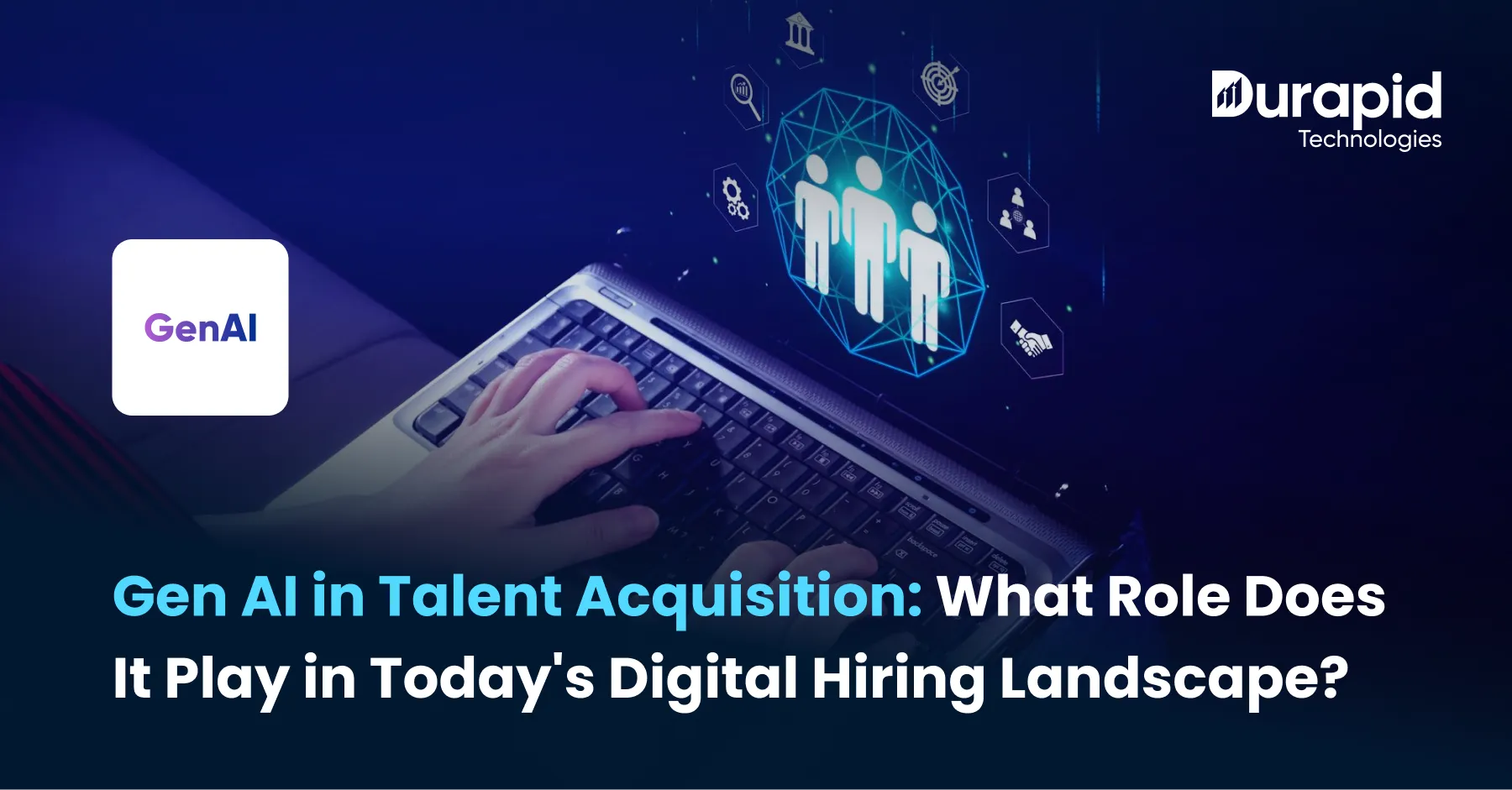
The impact of AI technology on talent acquisition has been enormous. This new phase has reworked the entire approach to sourcing, evaluating, and bringing talent on board. The businesses are under constant strain, more so than in the past, to fill posts quickly with the right people. The unfortunate fact is that traditional recruitment methods do not fit well with the fast pace of modern life. However, the partnership between AI and recruitment provides a solution to this issue by taking care of the monotonous tasks and showing the data that alters the hiring process.
At the same time, the modern recruiting teams are equipped with talent acquisition software, which allows them to sift through thousands of applications within minutes, rather than weeks. The end result is that the blending of AI with talent acquisition methods brings about good news in terms of speeding up the hiring process and also improving the quality of the candidates. On top of that, those companies that are at the forefront of these revolutionary changes are the ones that have the upper hand in the competition for employees in the labor market.
What Is Talent Acquisition?
Talent acquisition is a process that has a significant strategic element and it seeks to identify, attract, and hire the professionals that are most aligned with the company’s mission. However, it is not such a straightforward case as filling open positions. Instead, it is a matter of creating talent pipelines, enhancing employer branding, and developing long-lasting, supportive workforce strategies that are in line with the company’s growth.
One needs to be aware of the difference between reactive hiring and proactive workforce planning in order to understand the true meaning of talent acquisition. The process actually consists of a series of steps from workforce planning to onboarding. Moreover, the talent acquisition process is determined by the dynamics of the market, the behavior of the candidates, and the skills that are in demand. Hence, organizations have to find the right mix of speed and quality. Additionally, they have to make sure that the applicants have a pleasant experience throughout the recruitment process.
In the meantime, contemporary HR talent acquisition divisions engage in a partnership with the company’s stakeholders to forecast the number of employees to be hired in the future. To be more specific, they keep their eyes on the trends in the labor market, and they not only identify the sectors that are lacking the necessary skills but also come up with ways of sourcing those skills before they are needed. As a result, such firms manage to surpass the times of talent scarcity and to be the first ones to deal with the rivalry. Plus, the career talent acquisition professionals are skilled in employer branding, candidate relationship management, and data analytics, which among others, contribute to success.
Talent Acquisition vs Recruitment: Understanding the Key Differences
Although the two terms are often used interchangeably, talent acquisition vs recruitment points up big differences. To start with, in recruitment, the primary concern is to fill the available positions by using the usual methods. However, in the case of talent acquisition, a strategic long-term approach is adopted instead. Ultimately, internal and external hiring come out of workforce planning and sustainable talent pipelines that have been developed.
For example, recruitment can sometimes be limited to placing job ads and sifting through resumes for available positions. In comparison, talent acquisition is an all-encompassing process. It practically involves employer branding, engaging passive candidates, and providing the manpower needed for the next hiring cycle. Moreover, companies with profound and efficient talent acquisition management practices already put their money down on potential candidates before the actual hiring process. They, in fact, build the relationship beforehand when the position is still not open.
Nevertheless, the strategic nature of talent acquisition requires expert teams. Particularly, a talent acquisition specialist develops a strong understanding of labor forces. Additionally, they know prospect motivations and monitor competition. Similarly, these professionals apply talent acquisition solutions to recognize future skill requirements. Thus, they devise proactive sourcing strategies that support business expansion.
What Is AI Recruiting?
AI recruiting uses machine learning algorithms and automated systems to make hiring processes more efficient. Essentially, these technologies perform candidate data analysis and make predictions about job fit. Furthermore, they remove tedious tasks that take up recruiter time. Additionally, the systems draw upon past hiring trends to provide better recommendations. As a result, they find and screen the right candidates with higher precision.
Notably, recent surveys show that 62% of professionals are positive about AI’s recruitment impact. However, adoption rates differ among companies. Specifically, the technology addresses the biggest pain points in modern hiring. These include resume screening, candidate matching, and initial engagement workflows.
Additionally, the system finds candidates who have similar skills instead of just matching keywords. Therefore, this feature opens reach to more talent and prevents unconscious bias during initial screenings. Ultimately, modern talent acquisition software includes these AI functionalities to enhance the entire hiring funnel.
How Does Artificial Intelligence Recruiting Work?
AI recruiting software consists of integrated technologies working together seamlessly. First, natural language processing algorithms analyze resumes and job descriptions semantically. Next, machine learning models predict candidate success rates based on historical hiring data. Then, automated workflows handle repetitive tasks like interviews and candidate communications.
Initially, the system takes in job requirements and success profiles of past hires. Subsequently, algorithms explore candidate databases and external sources to find the best matches. Notably, organizations mainly use AI for sourcing and engaging talent (40%) and recruitment data analysis (28%). Furthermore, advanced platforms offer immediate suggestions and point out candidates most likely to accept offers.
Key Technologies Used in AI Recruitment Tools
A few main technologies support modern AI recruitment platforms. Primarily, natural language processing allows machines to comprehend job adverts and applicants’ CVs. Specifically, it understands the context and meaning behind the words. Additionally, machine learning trains algorithms to detect traits shared by the best candidates. Therefore, this increases chances of finding them through the application process. Meanwhile, chatbots use conversational interfaces to carry out initial candidate screening.
Similarly, video interview technology assesses communication and engagement skills through video responses. Furthermore, predictive analytics guesses how well candidates fit roles and their retention rates. Also, robotic process automation handles administrative tasks like background check coordination and document gathering.
Moreover, integration APIs bridge AI tools with existing applicant tracking systems and HR platforms. Consequently, this allows smooth data flow throughout recruitment technology stacks. Additionally, cloud-based systems provide recruitment infrastructure that easily scales up or down.
Popular AI Recruitment Platforms
At Durapid, we’re building our GenAI Interview Evaluator with the same ambition as today’s market leaders. Platforms like Eightfold AI set the benchmark for skills mapping and internal mobility. HireVue has transformed video interviewing and assessments. Workable streamlines applicant tracking with AI-driven sourcing, while Fetcher automates candidate outreach end-to-end. Paradox pushes engagement forward through conversational AI.
Durapid’s GenAI Interview Evaluator is designed to operate in that league—bringing intelligent assessments, real-time insights, and scalable automation to help companies hire with speed and precision.
Benefits of Using AI in Talent Acquisition
AI adoption rates continue rising. Notably, survey results show 95% of managers responsible for recruitment expect bigger money allocation to AI hiring technologies. Consequently, main advantages include efficiency boosts, quality enhancement, and competitive edges in the whole talent acquisition process.
Faster Hiring Process
Automated application screening brings down time taken to hire candidates almost to zero. Specifically, manual application review that used to take days now completes in hours. Meanwhile, recruiters ensure high-level professional contacts while systems take care of routine tasks. As a result, organizations fill crucial positions quicker. Furthermore, they save revenue lost due to prolonged vacancies.
Additionally, AI-based scheduling tools eliminate annoying communications when coordinating interviews. Instead, candidates receive instant replies instead of waiting days for updates. Consequently, this swiftness enhances candidate experience and cuts down drop-off rates in recruitment funnels. Moreover, talent acquisition specialists take advantage of these effective processes. Therefore, they control more requisitions without loss of quality.
Improved Quality of Candidates
Machine learning models identify skilled candidates that traditional keyword searches might miss. Specifically, the system identifies candidates with transferable skills and potential for development. Notably, this works even when their experience doesn’t exactly match job requirements. In fact, a study says 74% of hiring managers think AI plays a significant role in evaluating candidate-job compatibility. Consequently, this accuracy results in good hires and contributes to improved retention rates.
Furthermore, predictive analytics enable forecasting candidate success probabilities. Specifically, systems analyze communication patterns, work histories, and test results. Therefore, this provides a comprehensive view of candidates. As a result, recruiters make better decisions backed by firm data instead of gut feelings alone. Additionally, modern staff acquisition software offers these insights effortlessly within existing workflows.
Reduced Recruitment Costs
Automation leads to decline in need for big recruiting teams that handle high application volumes. Consequently, companies do more using their current resources. Moreover, shorter time-to-hire results in lower costs per hire. Additionally, it brings quicker revenue generation from new hires.
In addition, the technology optimizes job ad spending through programmatic placement. Essentially, it targets ideal candidate profiles. Ultimately, such cost advantages make integration of AI and talent acquisition necessary for competitive organizations.
Expanded Talent Pools
AI sourcing tools reach candidate databases containing millions of profiles across platforms. Specifically, they locate passive candidates who aren’t actively looking for jobs but have required skills. Consequently, this brings in more talent apart from active applicants. As a result, companies work with better-quality candidates. Otherwise, these people wouldn’t know of job openings through regular means.
Moreover, the technology removes geographic limitations by effectively processing remote candidate applications. Therefore, companies hire and build whole teams of skilled employees with best talents regardless of place. Additionally, global sourcing capabilities help companies gain edges in specialized skills areas where local talents are scarce. Ultimately, skilled candidates looking for remote jobs directly hit career talent acquisition goals through this expansion.
Data-Driven Insights
Analytics dashboards monitor recruitment metrics in real time. Specifically, hiring teams track conversion rates, time-to-fill, source effectiveness, and candidate demographics. Consequently, understanding the situation reveals process bottlenecks and improvement areas. Therefore, leaders take strategic decisions backed by evidence rather than assumptions.
Furthermore, impressive models predict future hiring requirements in line with business growth patterns. As a result, companies ensure talent acquisition by setting up proactive strategies. Instead, they don’t just react to urgent position-filling needs. Moreover, workforce planning becomes more accurate with AI-intelligence backed forecasting power.
Additionally, organizations wanting to employ Power BI services for recruitment analytics receive AI-generated insights. Consequently, these integrate easily with business intelligence platforms to provide elaborate talent acquisition dashboards.
Key Challenges in AI Recruitment
Despite significant benefits, AI-assisted hiring processes still have several hurdles that companies need to clear. Therefore, understanding these issues allows correct application of AI technology in hiring. Furthermore, it establishes a more realistic outlook on talent acquisition management.
Algorithm Bias Concerns
AI systems train on historical data that might already contain bias. Unfortunately, if past recruitment was biased towards certain groups, algorithms continue doing so. Therefore, companies need to audit their AI systems regularly to check for bias. Additionally, technical departments should make training data more diverse. Specifically, they should perform fairness checks at various model development stages.
Moreover, sometimes it’s really hard to know how algorithms make decisions. Consequently, the “black box” issue makes it impossible to find and rectify biased recommendations. Therefore, companies need to work with vendors who offer explainable AI solutions. Specifically, these solutions justify candidate rankings. Furthermore, HR leaders in recruitment should know equal employment opportunity laws and compliance requirements.
Technology Implementation Barriers
Notably, survey results show 42% of businesses don’t use AI in recruiting currently. Furthermore, they also have no plans for adoption. Consequently, technical difficulties create integration issues with current systems. Specifically, older applicant tracking systems probably won’t have APIs for connecting AI tools. Therefore, financial and time constraints become main factors that prevent required IT support for implementation.
Specifically, teams need to reach the point where they work alongside AI tools effectively. Moreover, talent scouts should gain skills to draw out maximum benefit from latest technologies.
Data Quality Dependencies
AI systems can’t work properly if data is dirty and unstructured. Unfortunately, many companies suffer from different candidate records in different places. Consequently, bad data harms algorithms. Therefore, their recommendations become unreliable. However, companies that treat data management as company-wide priority beforehand will implement new hiring solutions successfully.
Furthermore, data privacy regulations make things harder for data collection and usage. Specifically, GDPR, CCPA, and similar laws apply strict norms when processing candidate information. Additionally, AI tools must comply with constantly changing legal standards in different places. Consequently, companies might face big liabilities if data protection fails.
Limited Soft Skills Assessment
AI can check whether applicants have the right technical qualifications. However, it can’t do the same regarding people skills. Specifically, things like company fit, good communication style, and emotional intelligence need human intervention. Consequently, companies that solely rely on automated screening might lose strong candidates. Unfortunately, these candidates don’t have traditional credentials but possess valuable soft skills.
Moreover, video analysis tools that claim to assess personality traits face accuracy questions. In fact, critics say these systems draw unreliable conclusions from limited data. Therefore, organizations should rely on AI as an assistant to human evaluators. Instead, they shouldn’t treat it as a total replacement. Ultimately, talent acquisition strategies characterized by this approach prove most effective.
Candidate Experience Risks
Automated interactions that lack human warmth may annoy applicants. Specifically, candidates who get automated chatbot replies not tailored to their needs may feel they matter little. Consequently, long periods with no human contact can ruin an employer’s image. Therefore, organizations need to find the right combination of automation and personalization. Particularly, they must maintain this at most critical points in the process.
Furthermore, errors in AI systems lead to negative user feelings. Specifically, application mistakes, wrong rejections, and system failures give bad reputation to companies. Therefore, frequent testing and backup procedures ensure candidates aren’t affected by technical issues at all.
Additionally, by combining BI & Data Visualization capabilities, organizations monitor candidate experience metrics. Consequently, they locate points where AI communications need polishing.
How Industry Leaders Are Using AI Successfully in Talent Acquisition
Visionary companies demonstrate effective AI recruitment methods. Therefore, their experiences give important lessons for organizations going through digital transformation in talent acquisition.
Technology Sector Innovations
Big tech firms lead AI adoption during hiring. Specifically, every day they receive thousands of applications. Consequently, they need fast and effective screening mechanisms. Therefore, these companies create their own talent acquisition software according to specific requirements. Additionally, recruiting teams use AI automation together with human skills and supervision. As a result, this preserves candidate quality while expanding operations.
Moreover, some firms match employees internally with AI. Consequently, this process reduces time needed for filling positions. Furthermore, it improves retention at the same time. Specifically, internal mobility platforms monitor employee skills and career aspirations. Therefore, they suggest growth paths that harmonize with both personal and organizational objectives.
Healthcare Industry Applications
In healthcare, organizations suffer from critical talent shortages and high turnover rates. Fortunately, AI quickly spots candidates who possess specialized certifications. Additionally, automated credential verification speeds up compliance checks necessary in medical hiring. Meanwhile, chatbots handle pre-screening of candidates regarding shift availability and location preferences.
Furthermore, predictive analytics point out nurses and doctors likely to quit. Consequently, retention teams then step in with necessary engagement programs targeted to individuals. As a result, this data-driven approach cuts down on expensive turnover in most vital roles. Moreover, healthcare talent acquisition specialists apply these knowledge-based observations to make workforce situations more stable.
Retail Sector Strategies
Retail companies need to hire large numbers of temporary and hourly workers. Consequently, AI-based scheduler tools manage interview timings of different places simultaneously. Additionally, mobile-friendly application systems align with candidates’ preference for smartphone communication. Moreover, automated reference checking speeds up and makes background verification more reliable.
Furthermore, conversational AI handles candidates’ repetitive questions about benefits, schedules, and career advancement opportunities. As a result, this frees recruiters to focus on candidate assessment and relationship building. Moreover, the technology ensures communication continues even when hiring is at peak.
Financial Services Implementations
Financial institutions like banks and insurance companies apply AI to identify candidates who possess regulatory compliance knowledge. Specifically, algorithms confirm required qualifications and identify candidates with right profiles. Additionally, video interview assessment determines communication skills necessary for client-facing roles. Meanwhile, automated fraud detection checks application data for discrepancies.
Moreover, these organizations apply AI to enhance diverse hiring results. Specifically, blinded recruitment erases personal details that could potentially cause unwitting bias. Furthermore, predetermined criteria for assessing candidates allow systematic evaluation of each applicant. Consequently, this works regardless of application time or place.
Additionally, organizations considering comparison between Microsoft Fabric vs Power BI for recruitment analytics will find both platforms facilitate AI-supported insights. Therefore, these augment talent acquisition strategies.
Integrating AI into Your Recruitment Approach
Success of AI technology adoption relies on careful design and gradual execution. Therefore, organizations should start with small-scale experimental projects to overcome specific difficulties. Additionally, partner with suppliers that have demonstrated success and solid customer service backing. Furthermore, devise tactics that allow AI to work hand in hand with HR technology already in the organization.
Moreover, identify exact points where you can measure AI’s influence on recruitment outcomes. Specifically, measure time taken to hire, caliber of new employees, candidate satisfaction, and hiring costs. Notably, do this before and after AI introduction. Consequently, use these points to show ROI and support your improvement efforts. Ultimately, good talent acquisition management needs ongoing measurement and refinement.
Furthermore, maintain continuous monitoring of human elements in AI-assisted processes. Specifically, recruitment staff should review machine suggestions and finally decide who to hire. Additionally, conduct periodic checks to look for algorithm bias. Therefore, make sure employment laws are being followed. Moreover, company policy of being open with candidates about AI role contributes to building trust. As a result, it helps keep the employer brand positive.
Ultimately, the direction of talent acquisition combines AI with human judgment. Consequently, organizations that know how to strike this balance will get the best applicants first. Furthermore, Generative AI technique continually offers new recruitment applications. Therefore, these cover all aspects from writing job ads to interacting with large numbers of candidates in a personalized way.
Frequently Asked Questions
What is the difference between talent acquisition and recruitment?
Recruitment fills immediate open positions. In contrast, talent acquisition takes a strategic, long-term approach to workforce planning and pipeline development.
How does AI reduce bias in hiring?
AI removes identifying information during initial screening. Additionally, it applies consistent evaluation criteria to all candidates.
Can small businesses benefit from AI recruiting tools?
Yes, many talent acquisition solutions offer scalable pricing. Consequently, this provides automation benefits without enterprise-level complexity.
What skills do recruiters need to work with AI?
Modern talent acquisition specialists require data literacy, technology aptitude, and strategic thinking. Additionally, these complement traditional relationship-building capabilities.
How long does AI recruitment implementation take?
Implementation timelines range from weeks for basic tools to several months for comprehensive platforms. Ultimately, this depends on integration complexity.
Recent Blog

Top 10 AI Agent Tools: Features, Pros, Cons & Comparison
March 9, 2026