AI-Powered Software Development: 10 Practical AI Use Cases Every Developer Should Know
A few years ago, software development required developers to work during the night while they handled numerous tasks, wrote unwanted documentation, and chased deadlines that never seemed to move. The process has undergone a complete transformation since developers now use AI tools for their daily coding work, which includes writing code, finding bugs, plus developing tests. The AI-driven tools which startups, enterprise teams, along with software development companies use show that this technology has spread well beyond big tech. McKinsey reports that generative AI tools increase developer productivity from 20 to 45 percent for coding tasks, which teams observe in their ongoing work. The real question now is not whether to use AI but how you implement it into your daily development tasks. This guide presents 10 AI use examples which developers can apply right now with existing tools while showing where this technology is heading.
What Is AI-Powered Software Development?
The AI software development process uses machine learning along with large language models together with intelligent automation systems to create an efficient software lifecycle solution. The solution consists of multiple capabilities which include GitHub Copilot, Cursor IDE plugins, AI-based CI/CD systems, automated testing tools, plus smart code review software, all of which now form part of the Top 10 Software Development technologies that teams use to evaluate modern engineering workflows. Every system uses code context information to understand developer intentions before it performs repetitive tasks, which enables programmers to concentrate on essential human functions such as architecture, logic development, plus user experience design.
Why AI Is Changing Modern Software Development?
Gartner predicts that by 2027, 80 percent of software engineering organizations will adopt AI-augmented development tools, which now have less than 25 percent usage among organizations as of 2023. Organizations need AI to accelerate their development process while decreasing product defects along with cutting costs, but people need to understand that quality outcomes still depend on the humans guiding those tools. AI-assisted code review systems developed by Google and Microsoft catch 30 to 40 percent more production bugs than manual-only review, which means lower support costs along with happier users. The economics are equally hard to ignore since a senior developer costs an organization $150,000 to $200,000 annually, while an AI coding assistant that handles boilerplate, test generation, plus documentation costs a fraction of that, which enables organizations to achieve higher productivity through their existing workforce.
How AI Fits Into the Software Development Lifecycle?
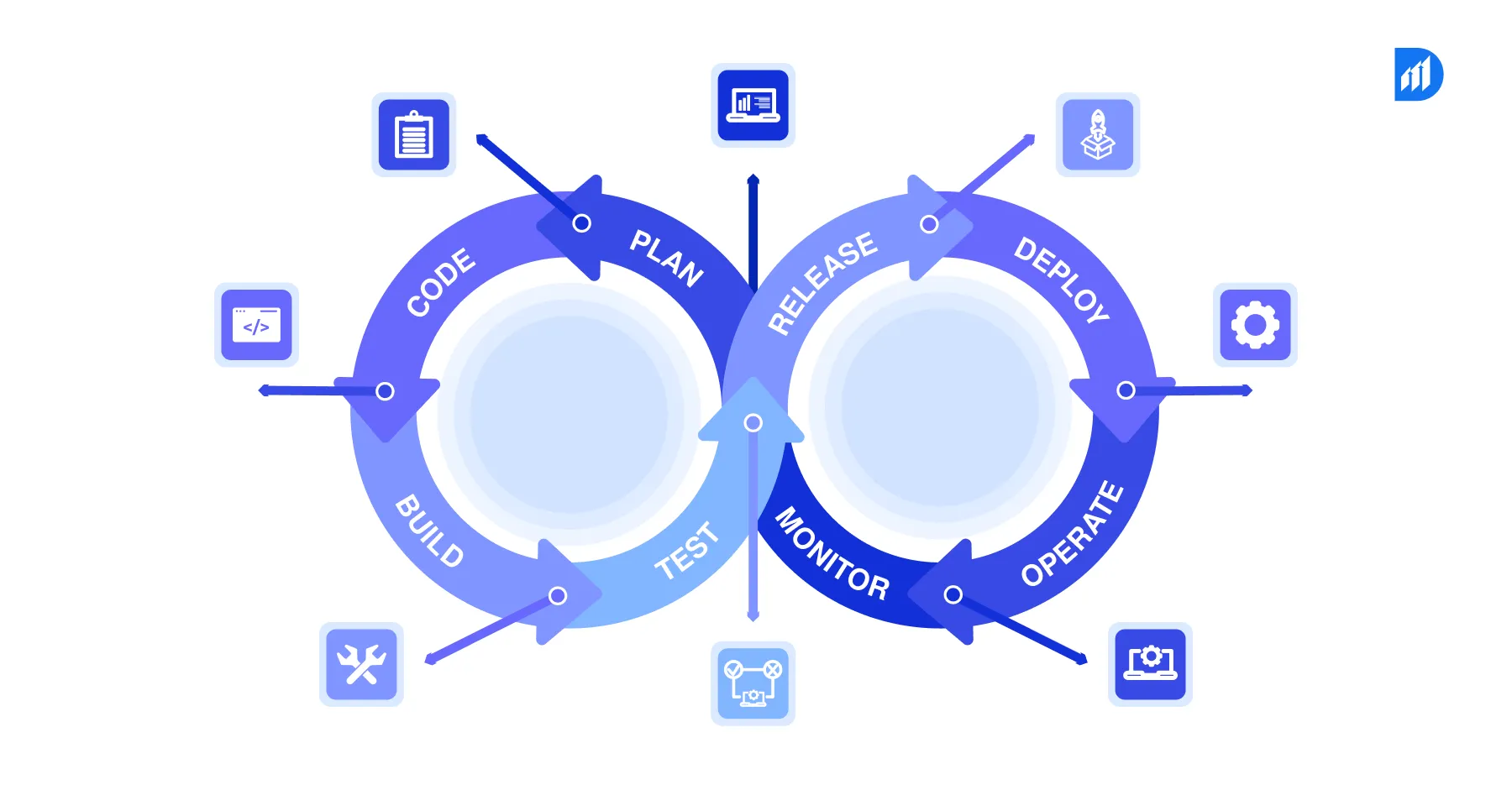
The SDLC process increases its strength through each AI technology as planning uses historical project data for AI tools to create timeline estimates while identifying potential risks. AI design tools provide architects with design pattern recommendations based on project requirements along with available development resources. The combination of automated test creation, visual regression testing, plus intelligent defect prediction systems provides extensive advantages to testing and quality assurance activities. AI-based CI/CD systems identify system anomalies to initiate automatic rollbacks, while machine learning models in post-release monitoring detect performance problems before end users experience them.
Why the Full SDLC Matters Here
Most teams start by adding AI to just the coding phase, which is a good start, but the real efficiency gains come when AI touches every phase from planning all the way through post-release monitoring, with teams that go broader reporting faster releases, fewer incidents, plus lower maintenance costs overall.
Key Technologies Driving AI-Powered Development Tools
Large language models like GPT-4 and Code Llama process code as natural language, which is what enables context-aware suggestions, while machine learning-powered static analysis engines detect patterns that relate to security vulnerabilities along with performance issues. Vector databases store code embeddings that enable semantic code search across extensive repositories, while reinforcement learning from human feedback (RLHF) improves suggestion accuracy by learning from developer acceptance and rejection of suggestions over time. The infrastructure system uses Kubernetes to manage AI workload distribution, while Apache Kafka handles real-time event processing from monitoring systems. Azure OpenAI Service together with AWS Bedrock deliver production-ready LLM APIs that integrate directly with development toolchains.
Top 10 AI Use Cases in Software Development
These systems function in real-world applications because they operate in active production systems at this moment.
AI-Assisted Code Generation
GitHub Copilot along with Amazon CodeWhisperer create function-level and class-level code through natural language commands plus existing contextual information, which enables Microsoft developers to decrease their basic programming work by 55 percent while delivering custom software development projects.
Automated Bug Detection and Code Review
AI models trained on millions of code commits identify patterns tied to bugs, security flaws, along with performance issues. Tools like DeepCode and Snyk flag vulnerabilities before code merges, while teams using AI code review see defect escape rates drop by up to 40 percent compared to manual-only review cycles.
Intelligent Test Generation
Developers spend excessive time writing unit tests yet tend to prioritize other tasks above this work. AI tools like Diffblue Cover and CodiumAI create test suites automatically from source code, which enables test coverage to increase from 30 to 40 percent all the way to 70 to 80 percent without requiring extra developer work.
Natural Language to SQL and API Query Generation
AI tools developed through Azure OpenAI and Google Vertex AI enable developers and data analysts to create SQL queries plus API calls from plain English questions without needing data engineers, because these tools work directly with BI systems along with Snowflake and Databricks data warehouses.
AI-Powered Documentation Generation
AI tools analyze code and generate inline comments, README files, plus API documentation automatically, which means documentation remains up to date without any need for manual maintenance. This solves one of the most frequently neglected responsibilities within any development team.
Predictive Defect Analysis
ML models trained on historical bug data predict which files or modules carry the highest defect risk before the next release, giving teams the insight to prioritize testing. Organizations with these models in place report 25 percent fewer production incidents per release.
AI-Driven CI/CD Pipeline Optimization
AI analyzes build and deployment logs to identify slow process stages, unreliable tests, plus system performance limitations. It then provides solutions which automatically decrease build duration along with increasing deployment rates, both of which have major impact on DevOps efficiency.
Intelligent Code Refactoring
AI spots code smells, redundant logic, plus performance anti-patterns across large codebases and suggests specific refactoring steps. For organizations carrying legacy enterprise systems, this speeds up modernization without requiring a full rewrite.
Security Vulnerability Scanning
AI-powered static analysis tools scan source code for OWASP Top 10 vulnerabilities, injection flaws, plus authentication weaknesses from directly inside the development environment, so developers get security feedback as they code rather than weeks later in a separate audit.
AI-Assisted Adaptive Software Development
What is adaptive software development in the context of AI? It is a development workflow that adjusts based on what is actually happening in the project, as AI monitors sprint velocity, defect trends, plus team capacity and then recommends changes to backlog priorities or sprint scope so that planning assumptions stop drifting so far from real-world delivery.
How AI Improves Developer Productivity and Efficiency
GitHub’s own research shows developers using Copilot complete tasks 55 percent faster, but the bigger thing developers report is higher satisfaction since less time on repetitive work means more time on the problems that actually matter. The cognitive burden of code reviews decreases because AI tools enable reviewers to concentrate on architectural design along with logical assessment instead of style requirements or syntax specifications. The AI tools used by outsourced software development teams ensure that all contributors maintain consistent code quality even when working from different time zones, which allows developers in different locations to produce code that meets identical standards.
Popular AI Tools Developers Are Using Today
The first question which teams exploring AI for software development ask is about which tools developers are actually using right now. The development ecosystem experiences rapid growth yet current teams have settled on several platforms as standard tools for their work. The table below shows the most commonly used tools together with their actual functional capabilities.
| Tool | Primary Use Case | Key Benefit |
| GitHub Copilot | Code generation and completion | Helps developers complete tasks up to 55% faster |
| Cursor | AI-native code editor | Enables context-aware edits across multiple files |
| Snyk | Security vulnerability scanning | Detects OWASP vulnerabilities directly inside the IDE |
| Diffblue Cover | Automated unit test generation | Improves test coverage to around 70-80% |
| Amazon CodeWhisperer | Code suggestions and security checks | Offers deep integration within the AWS ecosystem |
| Tabnine | Code completion for 30+ languages | Supports on-premise deployment for enterprise teams |
Most of these fit naturally into environments developers already work in every day including VS Code, JetBrains IDEs, GitHub Codespaces, plus Azure DevOps. They do not replace existing workflows but make those workflows faster along with smarter.
Benefits of Using AI in Software Development
The benefits go well beyond individual developer speed, as release quality improves because AI catches more issues earlier. CI/CD pipelines run faster with fewer manual checkpoints so deployment frequency goes up, while security posture strengthens because vulnerabilities get flagged at the source instead of showing up in production.
AI Benefits in Regulated Industries
For healthcare software development along with fintech software development specifically, the gains are even sharper, as AI-powered security scanning and compliance automation cut audit preparation time by 30 to 50 percent. Regulatory requirements become easier to enforce when AI is automatically checking code against compliance rules every single day. Custom software development companies operating in regulated spaces are seeing this shift most clearly, as the compliance overhead that once required dedicated teams now gets handled within the development pipeline itself.
Key Challenges in AI-Powered Development
AI tools are not perfect, and it is worth being honest about that. LLM-generated code can contain subtle bugs or security flaws that experienced developers need to catch, while models trained on public repositories sometimes suggest patterns that are completely inappropriate for enterprise or regulated environments. Integration complexity is another real problem, as adding several AI tools to a workflow without clear ownership creates fragmentation fast. Teams need a deliberate strategy around which tools to adopt, how they fit together, along with who owns what. Data privacy is a genuine concern too, especially in regulated industries, since sending proprietary code to cloud-based AI services requires careful evaluation of how that data is handled. Self-hosted models along with private Azure OpenAI deployments are how most organizations solve this.
Best Practices for Implementing AI in Development Workflows
Start with one use case, as GitHub Copilot has the lowest adoption friction of any tool in this space, shows immediate measurable results, along with building broader team buy-in once developers see the productivity gain firsthand. Review standards for AI-generated code should be set and treated like code from a junior developer, reviewed before it merges, with the team deciding which AI suggestions need additional testing before going anywhere near production. Investing in developer training also matters because AI tools amplify what developers already know, meaning a developer who understands good SQL gets far more value from an AI query generator than one who does not. Working with a custom software development company that has real AI integration experience helps build an adoption roadmap that actually works.
The Future of AI in Software Development
The direction is clear: AI agents handling end-to-end development tasks. Cognition AI introduced Devin in 2024, who demonstrates the ability to process feature requests along with creating operational pull requests without requiring human intervention. These systems remain in an early phase but their progress has surpassed existing expectations. The industry is experiencing changes in team organization because AI systems now perform repetitive tasks while human developers focus on high-level decisions that require critical thinking. What is adaptive software development going to look like in five years? AI systems will know a team’s patterns, preferred frameworks, plus quality standards, applying that knowledge to every task without being asked. The teams that start building this muscle now will compound that advantage every single quarter.
How Durapid Technologies Helps You Implement AI-Powered Software Development
Durapid Technologies brings 120+ certified cloud consultants, 95+ Databricks-certified professionals, plus deep expertise in Azure OpenAI, AWS Bedrock, along with enterprise ML platforms, with teams that have delivered AI integration projects across manufacturing, healthcare, fintech, along with logistics. Rather than selling generic tool subscriptions, the team builds implementation strategies around your actual codebase, team structure, plus security requirements. Whether you are modernizing a legacy system through AI-assisted refactoring or standing up a full MLOps pipeline for model deployment, the solution gets built around your constraints, not a template. Durapid delivers measurable results across custom software development along with enterprise AI agent deployment, with clients reporting development cycle time reductions of 40 to 60 percent within the first three months of AI toolchain adoption.
Frequently Asked Questions
What is AI-powered software development?
It uses machine learning along with large language models to assist tasks across the development lifecycle including code generation, testing, bug detection, plus deployment, bringing intelligence into every stage rather than just automating isolated steps.
How does AI improve software development productivity?
Tools like GitHub Copilot help developers finish tasks up to 55 percent faster by handling boilerplate along with test generation, freeing developers to focus on higher-value work that requires real judgment along with experience.
What is adaptive software development in AI contexts?
It is a workflow where AI monitors project metrics and adjusts priorities, planning, or resources dynamically based on real-time sprint along with quality data so that delivery stays aligned with what the team can actually achieve.
Is AI-generated code safe to use in production?
It needs proper review along with testing before deployment, and pairing it with automated security scanning helps catch vulnerabilities before they reach production so the risk stays manageable.
Which industries benefit most from AI in software development?
Healthcare, fintech, retail, plus manufacturing see the strongest results, as compliance checks, security monitoring, along with faster releases create clear and measurable advantages across all four.

Deepesh Jain
Recent Blog