AI-Powered HR Chatbots: Top Real-World Examples, Use Cases, and Their Benefits
Your HR department had to reply to the same question about benefits for the 73rd time this month. On top of that, there are many employee questions, 214 to be exact, that have not been answered yet, onboarding documentation for new hires that is still not completed, and your HR business partner has once again canceled a strategic meeting to deal with policy questions that are routine. This situation is estimated to cost $312,000 every year in lost HR productivity for companies according to the Gartner’s 2024 Workforce Analytics Report. By the use of HR chatbots, this problem is completely eliminated.
Companies that implement these AI-based systems manage to free up 67% of the HR capacity that was previously used for answering routine queries, thus allowing them to engage in other highly valued initiatives such as talent development and culture building. The customer support side of human resources is now able to resolve 78% of employee queries instantly and cut response time down to 12 seconds from 4 hours.
The modern HR chatbots have advanced beyond the simple FAQ bots, their artificial intelligence background is strong. The talkative machines that run on generative AI and natural language processing are these sophisticated platforms. The systems are capable of doing complicated stuff at once like processing leave requests, having interviews, and giving support to workers through Slack, Teams, and Emails in a simultaneous manner.
What Is an AI-Powered HR Chatbot?
An HR chatbot is a machine that imitates human being’s speech and interactions through AI. The primary goal is to assist employees from the very beginning until the end of their tenure at the organization. Such systems are directly interfaced with HRIS systems like Workday, SAP SuccessFactors, and BambooHR to securely obtain employee data and supply answers to questions instantly.
The older generation of chatbots that were based on rules has always been quite predictable in their decision-making process. They will be of no use when employees ask questions differently. More sophisticated hr chatbots utilize large language models to understand the context, customer’s meaning, and ambiguity to handle queries. When an employee says, “Next Friday is off for me?” the chatbot will be looking at the person’s vacation balance, date in question, and approval steps. It either directly processes the request or asks for a manager’s authorization.
Technical Architecture Behind HR Chatbots
The underlying technical architecture of such systems consists of four key components. The first natural language understanding layer dissects queries from employees. With 94% accuracy, it pinpoints the intended meaning. The second dialog management component keeps track of the conversation’s context. It chooses an adequate answer from the past interactions.
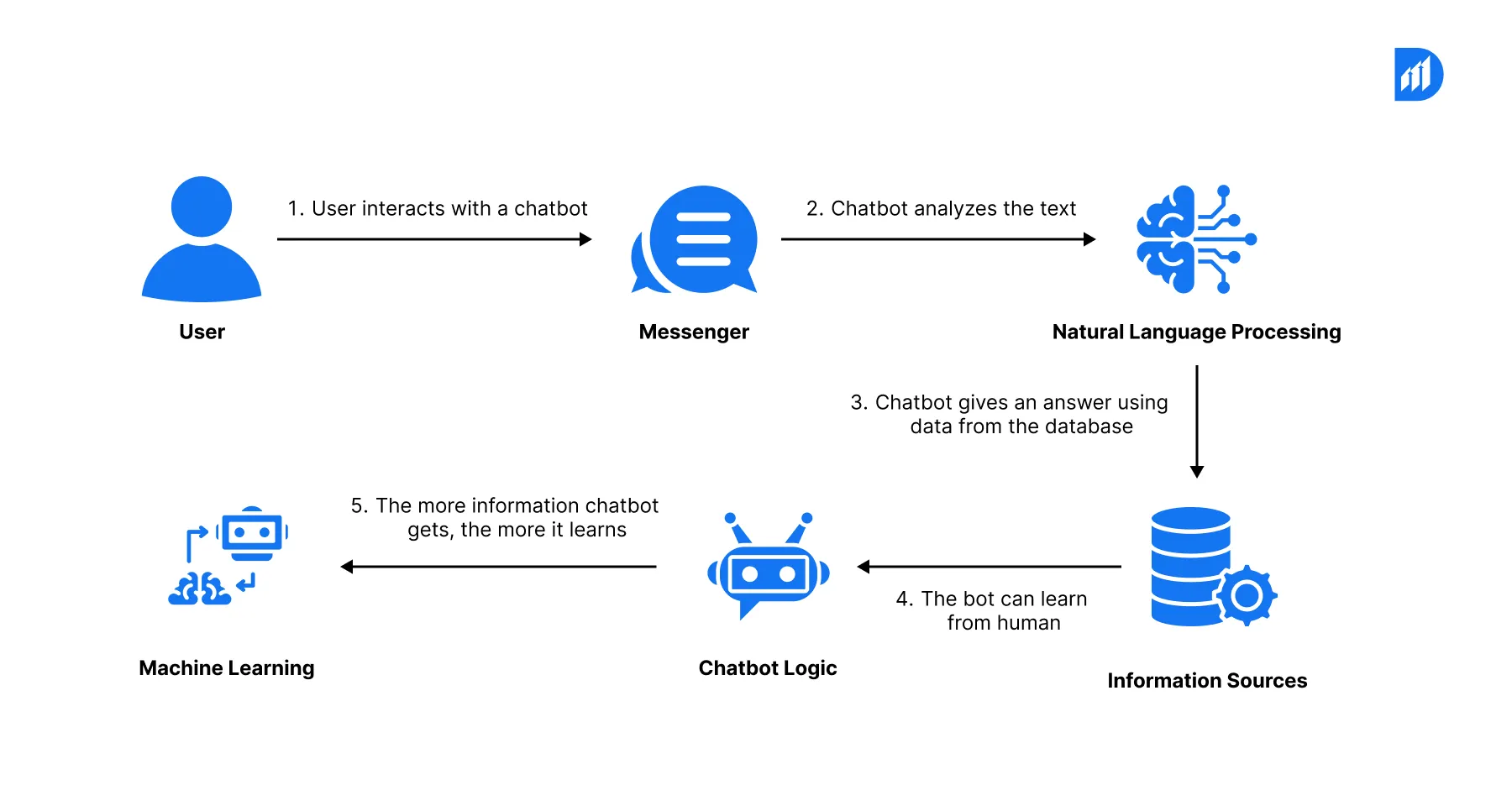
The integration layer accesses HR backend systems via secured APIs. Finally, the analytics engine monitors conversation patterns while at the same time revealing common issues that require a review of the company’s policies.
Why Organizations Are Adopting HR AI Chatbots
HR AI chatbots are among the top trends influencing the future of workforce. They address major drawbacks like slow response rates. Unilever transformed their chatbot system and cut down on HR query response time to a whopping 82%. IBM’s HR assistant clarifies 1.2 million employee questions each year without needing human intervention. These statistics explain why 64% of companies are already planning the implementation of HR AI chatbots by 2026, as per the findings of Deloitte’s HR Technology Survey.
How HR Chatbots Enhance Employee Engagement and Experience
Based on Forrester’s Employee Experience Research, employee engagement decreases by 31% if they wait longer than 4 hours for HR responses. With the help of HR chatbots, the situation can change completely. They offer instant, accurate answers 24/7 over various communication lines. Employees get immediate support whether they message at 2 AM or during lunch breaks.
AI-powered chatbot companies report their employees being 43% more satisfied. Management deals with 29% fewer HR-related escalations. So, employees do not have to sit on the fence with policy documents. They can easily devote their time to productive work. Accenture deployed an HR chatbot that reduced average query resolution from 14 minutes to 90 seconds, a 93% improvement.
These systems base their interactions on the data of the employees. For instance, the system provides a new hire with onboarding checklists and reminders for compliance training. A five-year employee receives notifications about career development programs and internal mobility opportunities. Thus, this contextual awareness results in the creation of better employee experiences than those of generic FAQ systems that treat everyone the same way.
Accessibility for Distributed Workforces
HR chatbots also enhance accessibility for distributed workforces. Employees that are working remotely and are in different time zones get access to the same level of support as those in the office. The system saves the conversation history. This allows the employees to stop talking and later continue without having to repeat what has been said. On the other hand, necessity for the continuity in behalf of the relevant process becomes essential in issues in which the crux is at stake, as in the case of benefit enrollment or performance review for instance.
Essential Features to Look for in an HR Chatbot
The process of selecting the correct HR chatbot includes evaluation of certain technical capabilities. The best hr chatbots comprise an array of features that distinguish basic automation from enterprise-grade solutions.
Multi-channel deployment stands as the first requirement. Your chatbot should be able to operate over Slack, Microsoft Teams, email, web portals, and mobile applications. It should not require the employees to switch platforms. Firms that are using single-channel chatbots experience 41% lower adoption rates. Employees tend to abandon the tools that interrupt their flow of work.
The quality of natural language processing is the main factor determining actual usability. It is important to check how the systems cope with changes in wording, mistakes in spelling, and informal speech. A bot that only responds to queries in a formal manner will only annoy the users. It will drive them to emails. The best ai-powered chatbots for hr departments in 2026 have an accuracy rate of intention recognition of 92-96% over diverse phrasing patterns.
Integration and Security Requirements
The depth of HRIS integration is more important than its breadth. The chatbot you are going to use has to have access to core HR systems including read and write permissions. It needs more than just basic data access. The integration needs to handle employee record updates, transaction processing, and workflow triggering. It should not just exhibit the information. Superficial integrations lead to the creation of “answer bots” that can’t really help employees with their issues.
Security and compliance features safeguard sensitive employee data. It is important to look for certain certifications and compliance such as SOC 2 Type II, GDPR compliance. Also check the presence of role-based access control along with audit logging. THR chatbots are privy to sensitive information that includes salaries, medical records and evaluations. Hence, if a violation of the security takes place, your company can probably be affected by the legal consequences and also the loss of its reputation.
Analytics capabilities allow for the improvement of the process to go on forever. The system should monitor the volumes of queries, rates of resolutions, points where conversations drop off, and patterns of unanswered questions. These findings will assist the HR departments in recognizing the gaps in their policies. They help in refining the responses of the chatbot and calculating the return on investment. Those organizations that lack analytics capabilities report that their chatbot effectiveness has decreased by 54% over time.
Top HR Chatbot Solutions in the Market
Several platforms dominate the enterprise HR chatbot market, each with different strengths. Knowing these alternatives helps you to connect the capabilities with your specific needs.
Workbot from Workato goes beyond just simple Q&A by providing complete workflow automation. The software interlinks with more than 1,000 apps and performs intricate multi-step operations. Workers in the chat interface can submit their expense reports, ask for equipment, or carry out onboarding processes. They don’t have to leave the chat app. Firms utilizing Workbot mention that they complete their workflow 71% faster than the manual processes.
ServiceNow’s HR Service Delivery ensures deep ITSM integration along with built-in chatbot functionality. The platform is most effective in the areas where HR and IT services intersect in the organization. The employees take care of password resets, access requests, and questions about benefits all through a single interface. The system carries the context through all departments. It avoids the disjoined experiences that are usually a result of point solutions.
Platform-Specific Solutions
With Microsoft’s Copilot, Microsoft 365, the generative AI features are available to teams that work mainly in Teams. The assistant provides answers to questions by searching in SharePoint documents, emails, and HR systems. Though organizations that are already in for the Microsoft ecosystem enjoy the native integration, the standalone functionality still remains limited compared to that of specialized HR platforms.
IBM Watson Assistant not only provides templates for specific industries in HR but also offers support in 13 different languages. Global businesses with diverse employee populations are more inclined towards Watson’s localization capabilities. The platform automatically deals with differences in regional policies. It assures that the employees in Singapore receive different benefits information than the ones in Germany.
Specialized HR-Focused Platforms
Leena AI focuses on HR and excels at natural language understanding. The system can recognize more than 200 HR intents right away. This results in 60% less configuration time compared to that of general-purpose chatbots. Companies go live with Leena AI in just 4-6 weeks. It may take up to 12-16 weeks for custom-built solutions.
Common HR Chatbot Use Cases Across Organizations
HR chatbots’ diverse applications cover various stages of the employee lifecycle, from hiring to even the offboarding process. Knowing about these use cases, one can see the areas where automating processes is most beneficial.
Onboarding automation takes the lead in terms of the highest-value use case. During onboarding, chatbots support new workers by guiding them through the process of filling out documents, setting up their training times, and figuring out where to access the company’s resources. Also, the system sends notifications for tasks that are still not completed. It then deals with common questions that arise in the first week such as parking, equipment, and team structures. Organizations that utilize automated onboarding processes experience a 34% decrease in time-to-productivity and a 22% decrease in new employee turnover.
Leave and attendance management does not need the usual communication back and forth which is a big waste of time. Employees can find out their leave balances, request for time off, and immediately know if their requests are approved or denied. This happens according to team coverage rules. Instead of the usual emails back and forth, managers see a consolidated approval queue. This automation shortens the leave processing time from 45 minutes to just 2 minutes.
Benefits and Performance Management Applications
During open enrollment, benefits administration becomes a self-service process. Chatbots provide explanations regarding the various features of plans available, assist in weighing the pros and cons of coverage, and also direct the employees through the decision-making process. Queries from employees include “If I opt for the high-deductible plan, what will my out-of-pocket expense be?” They can do this without having to book an appointment with the benefits advisors. Organizations note an 89% drop in HR inquiries related to benefits during the enrollment period.
Performance management support is not limited only to the annual reviews. Chatbots issue goal-setting reminders, receive feedback from various stakeholders. They assist workers in drawing up development plans. The system provides managers with conversation templates and rating calibration advice. This support increases review completion rates by 76%. It also reduces the time managers spend on each direct report by 12 hours annually.
Recruitment and Candidate Engagement
Recruitment and candidate engagement help to shorten the time to hire. Chatbots take care of application screening, interview scheduling. They provide answers to candidates’ queries regarding the roles and company culture. The system automatically supplies the applicants with their current status. This prevents the “black hole” scenario which is detrimental to the employer’s brand. Organizations that implement recruitment chatbots fill vacancies on average 18 days quicker.
How Workbot Enables Total Automation of Internal Chatbot Processes
Workbot stands out from the competition because it offers a complete workflow automation solution. It goes beyond just isolated conversational functions. The system considers chat interface as command posts where workers initiate complex multi-system processes through their natural language.
The system connects chatbots to more than 1,000 enterprise applications such as Workday, SuccessFactors, Salesforce, ServiceNow, and custom in-house systems. This deep integration facilitates the actual workflow execution. It’s not merely information retrieval. For instance, when a worker asks for a new laptop, Workbot opens the ServiceNow ticket. It verifies budget approval in the ERP system, directs the request to the right manager. It informs IT about it all at the same time.
Workbot highlights the AI in HR that works on agents basis through its capability to take independent decisions. It follows the policies of the firm. The process grants authorization to routine requests, passes on to the next level the exceptions. It can also change the work process according to the situation. A person who works from home and asks for stationery will cause a different approval chain than a person who is in the main office. Such capabilities of conditional logic result in an 83% reduction in manual routing.
Pre-Built Workflows and Analytics
The platform offers pre-built HR workflows that smoothen the deployment time. The templates embrace typical scenarios such as hiring, letting go, vacation requests, and also expense refunds. Organizations tailor these basic blocks instead of creating from zero. This reduces the implementation time from 16 weeks to 4-6 weeks. This speed-to-value is important when the management insists on quick proof of ROI.
Analytics dashboards monitor the conversation metrics as well as the business outcomes. You see the workflows that have been successfully completed. You see the areas where the employees have left, and the processes that have been causing the most friction. Such transparency leads to continuous improvement. Companies using Workbot’s analytics enhance the chatbot’s efficiency by 47% during the first six months by making data-driven optimizations.
How Can Durapid Help You with Implementing AI-Powered HR Chatbots?
Durapid Technologies has the necessary knowledge for deploying conversational AI systems that are suitable for large enterprises. We ensure seamless integration with the existing HR technology stack. The company employs more than 150 professionals who are Microsoft-certified and AI experts. They are well aware of both the technical architecture requirements and the organizational change management needed for successful adoption.
Initially, we perform workflow analysis for determining the HR processes that provide the highest ROI through automation. A chatbot doesn’t need to be the solution for every interaction. There are still some complex situations that require decision-making by humans.
In the assessment phase, we create a map of your current HR service delivery model. We measure the time used for each query type. Then we focus on the areas where automation can be introduced depending on the volume and complexity of the queries.
During the implementation phase, our generative AI skills drive the creation of smart conversation flows. They use Azure OpenAI and custom language models as the backbone. The HR chatbot that we build for you uses a secure API connection. It integrates with Workday, SAP, BambooHR, or any other HRIS platform that you might have. Our certified consultants from our professional cloud team (120+ certified) ensure that your chatbot aligns with the data governance rules. We set up role-based access controls that safeguard sensitive employee data.
Training and Post-Deployment Support
Along with training and support for adoption, there is a common pitfall of organizations. They end up creating sophisticated chatbots that employees never use. We create communication strategies, produce user manuals, and offer training that shows the benefits through real-life situations. Companies that partnered with Durapid manage to get 73% adoption among employees in the first 90 days. This is much higher than the industry average of 34%.
The optimization after deployment keeps on increasing the effectiveness of your chatbot. Our team closely monitors the conversation analytics. They identify the patterns of unresolved queries and thereby refine the responses based on actual usage. Moreover, we provide interlinking with the other AI-powered chatbot systems across your company. This will consequently result in unified employee experiences across HR, IT, and facilities management.
Whether you are considering a GenAI HR assistant for handling simple queries or a GenAI interview evaluator as a part of your recruitment workflow, Durapid’s professional knowledge in AI/ML solutions and enterprise integration make sure that your HR chatbot will bring you quantifiable business benefits.
FAQ about HR Chatbots
Who is an HR business partner and what is the role of chatbots in supporting them?
An HR business partner is a strategic advisor whose task is to ensure that workforce planning aligns with the company’s objectives. HR chatbots liberate HRBPs from routine inquiries, enabling them to devote 67% more time to strategic activities.
What is the extent of AI use cases in HR chatbot implementations?
Leading HR AI chatbots recognize user intent with 92-96% accuracy and answer 78% of questions without human help.
How do advanced hr chatbots differ from basic FAQ bots?
Advanced systems conduct workflows, connect with various HR systems, comprehend context, and learn from discussions. Basic FAQ bots simply deliver pre-written answers without taking action.
How long does the implementation of HR chatbot usually take?
Deployment timelines range from 4-6 weeks for platform-based solutions with pre-built templates to 12-16 weeks for custom-built systems.
Are HR chatbots capable of ensuring the security of sensitive employee data?
Enterprise-scale HR chatbots include major security features like SOC 2 compliance, encryption, role-based access control, and audit logging.

Deepesh Jain
Recent Blog