AI In Patient Care Assistant: Driving Efficiency, Safety, and Better Health Outcomes
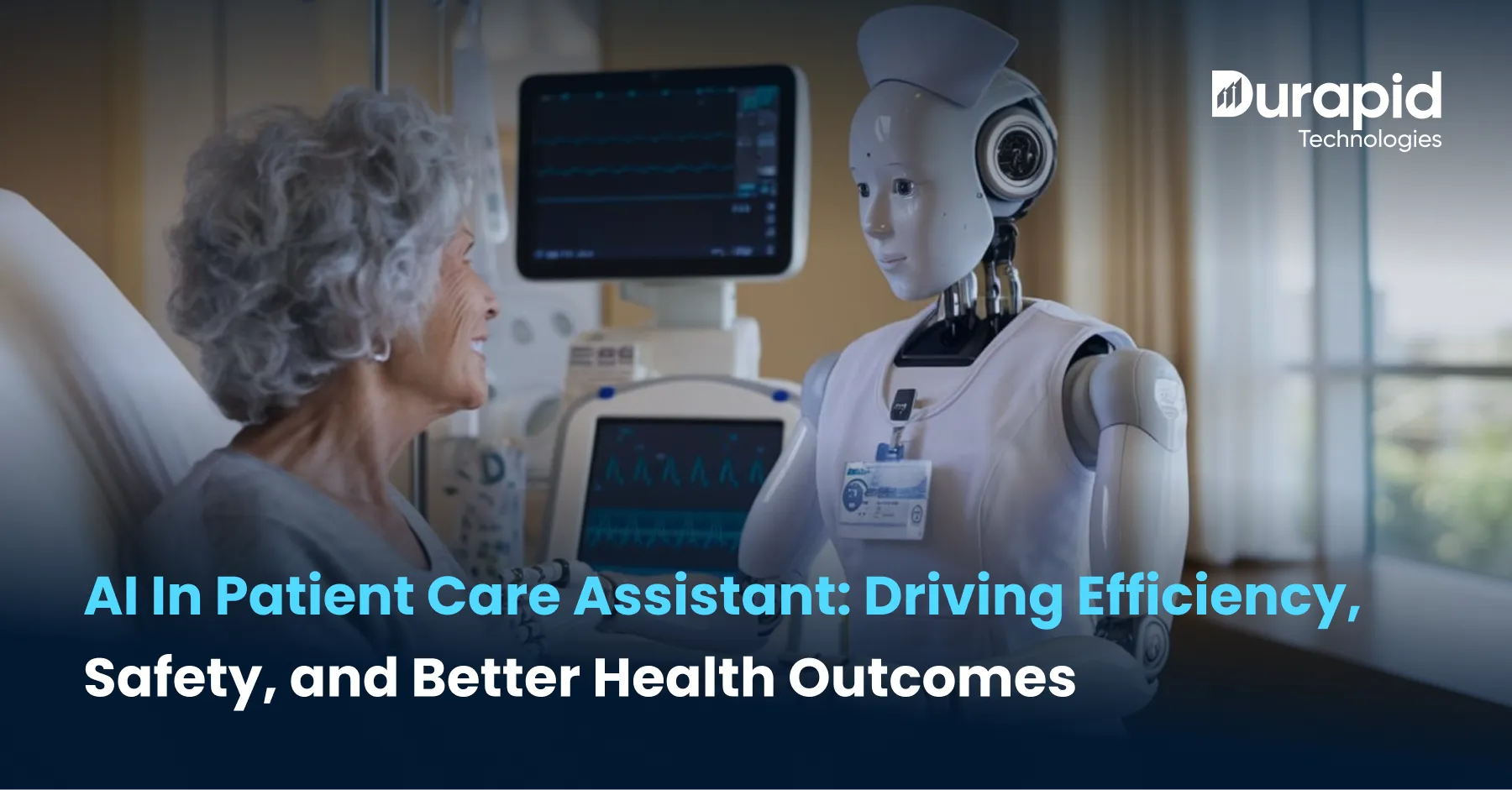
Envision a scenario where a hospital emergency department handles 200 patients every day; however, 40% of the patients have to wait more than 3 hours for just triage assessments. As a result, the staff’s burnout rises up to 68%. Moreover, medication mistakes become a big issue costing the hospital $1.2M each year. Now, imagine an AI patient care assistant who is monitoring vitals round the clock. It brings critical cases within 15 seconds and cuts workflow by 75%. This is not a prediction of healthcare of the future, it’s the reality in some hospitals. In fact, intelligent automation has led to a big change in patient care delivery there.
The role of the patient care assistant has gone though quite a change. The most common functions that patient care assistants do are vitals taking, moving patients around, and writing down notes. But in the backdrop of a 34% rise in clinical demands since 2020 along with a shortage of staff, healthcare institutions cannot do without a smarter support mechanism. Consequently, AI and ML solutions in patient care technology have now come to be the connector. They integrate machine learning algorithms with real-time monitoring to improve clinical workflows, supporting caregivers and clinicians without replacing human expertise.
What is an AI Patient Care Assistant and How Does It Support Healthcare Workflows?
AI patient care assistant is an advanced operation that takes over performing routine clinical tasks. It monitors patients’ conditions all day long. Additionally, it backs up medical staff with innovative analytical solutions and decision support tools. These AI systems do not let the patients down like the traditional patient care associates. Instead, they process data from electronic health records, wearable devices, and monitoring equipment to generate actionable insights.
Healthcare systems integrate these systems with the current infrastructure through the use of APIs. They relate him to electronic health record (EHR) systems like Epic or Cerner, Internet of Things (IoT) medical gadgets, and verbal interaction. The structure typically comprises three levels: initially, collecting data from different origins; then, machine learning algorithms for recognizing and predicting patterns; and lastly, doctor’s user interfaces for getting the insights and alerts.
Artificial intelligence (AI) has taken over the main tasks in patient care tech. These include automated vital sign analysis, medication scheduling reminders, fall risk assessment, and early grave warning system alerts. According to a study published in the Journal of Medical Systems, AI monitoring systems are able to pick up on patient deterioration 6 hours earlier than the usual methods. As a result, the number of ICU transfers is reduced by 26% while the survival rate is raised by 18%.
Scalability Advantage of AI Systems
The main difference between patient care technology and AI-enhanced systems is in scalability. The workload of one patient care associate is usually to take care of 8-12 patients in one shift. On the other hand, an AI system keeps track of unlimited patients at the same time. Processing thousands of data points in a second, it only alerts for critical cases that need human intervention.
Important Characteristics of AI-Driven Patient Care Technology in Today’s Healthcare
The current day AI-powered patient care assistant platforms provide five major capabilities. These positively impact the clinical operations. Continuous monitoring of vital signs in real-time applies computer vision and sensor fusion. It monitors heart rate, blood pressure, oxygen saturation, and breathing patterns round the clock. Whenever the parameters go out of the acceptable limit, the algorithms not only compute the risk scores. Additionally, they categorize the alerts based on severity and the patient’s history.
The second most important aspect of the electric feature is predictive analytics. Machine learning algorithms predict complications. Analyzing patient data that have been collected before the symptoms show up, they forecast risks early. For example, researchers at Johns Hopkins have shown that AI systems can predict sepsis onset 48 hours in advance with 85% accuracy. Meanwhile, traditional early warning scores provide only 30% accuracy.
The use of natural language processing allows for the clinical documentation to be done automatically. AI systems do the extraction of medical information that is relevant. Moreover, they update the records and suggest ICD-10 codes when clinicians dictate their notes or talk to patients. This, in turn, leads to a reduction of the documentation from 35% of a shift to less than 10%. Therefore, patient care associates can be more involved in direct patient communication.
Task Prioritization and Scheduling
The intelligent task prioritization is the fourth capability. AI systems study the workflow data of the various departments. These systems come up with the best resource allocation. If three patients need help at the same time, the algorithms will look at the level of severity, urgency of the tasks, and the nearness of the staff. Subsequently, they give the recommended order of responses. In addition, hospitals that have adopted intelligent scheduling report that there are 22% fewer delays in care delivery. There’s also a 31% increase in patient satisfaction scores.
The extremely important feature that can be ranked as number one in the list of five is the management of medications. These AI patient care assistant systems are capable of monitoring allergies, drug interactions, and dosing protocols with respect to the medications that are prescribed. Furthermore, these systems will then inform the pharmacy staff responsible for processing orders of the possible errors. Manual checks are likely to miss these. A publication in the American Journal of Health-System Pharmacy contained data. It stated that the AI-assisted medication review catches 94% of potentially harmful drug interactions. By comparison, the manual review alone achieves 76% detection rates.
How Artificial Intelligence Enhances Patient Care Assistants in Clinical and Pharmacy Settings
AI is augmenting rather than replacing the traditional workflows of patient care associates. It’s thereby transforming traditional patient care. In a clinical environment, different AI systems take on the tasks that staff would normally do like patient monitoring. As a result, human workers can entirely concentrate on things that need human interaction and require more effort. These include chatting with patients, helping them move around and coordinating the care with other staff members and family. A pilot project at the Cleveland Clinic revealed something interesting. Tech teams utilizing AI in their operations had interactions with patients that were 43% more per shift. At the same time, they reported 28% less stress.
The whole process works through the use of wearable sensors. These send the patient’s vital signs to the AI platform, where they are analyzed by an AI-powered chatbot. The AI systems employ algorithms that have been trained through millions of patient cases. Spotting trends that suggest danger, they act quickly. For instance, if the AI system sees worrying patterns, like slowly decreasing blood pressure or little changes in breathing, it will alert the nursing staff. Nurses need to pay attention to that patient. It uses the mobile devices they have with them.
Pharmacy Precision and Error Reduction

In the case of the patient care pharmacy operations, AI serves to improve precision in the places where a lot of people are being served. In the hospital pharmacies, around 300-500 medication orders are processed every day. That being the case, different kinds of mistakes may happen. These occur in the course of transcription, dispensing, or administration. To combat errors in the pharmacy, AI systems now check each step as per clinical guidelines. Facilities that have applied this technology report an incredible 89% decrease in medication administration mistakes.
The role of patient care associates has changed from merely completing tasks to patient education and providing emotional support. Artificial intelligence takes care of the delivery of information. Providing appointment reminders, medication instructions, and care plan updates, it sends these through the patient’s portal or mobile app. Thus, the patient care associate gets to devote time to the patient. Participating in a dialogue that addresses the patient’s concerns, they establish a therapeutic relationship which is beyond the capabilities of algorithms.
Benefits of Artificial Intelligence as a Patient Care Assistant in the Healthcare Industry
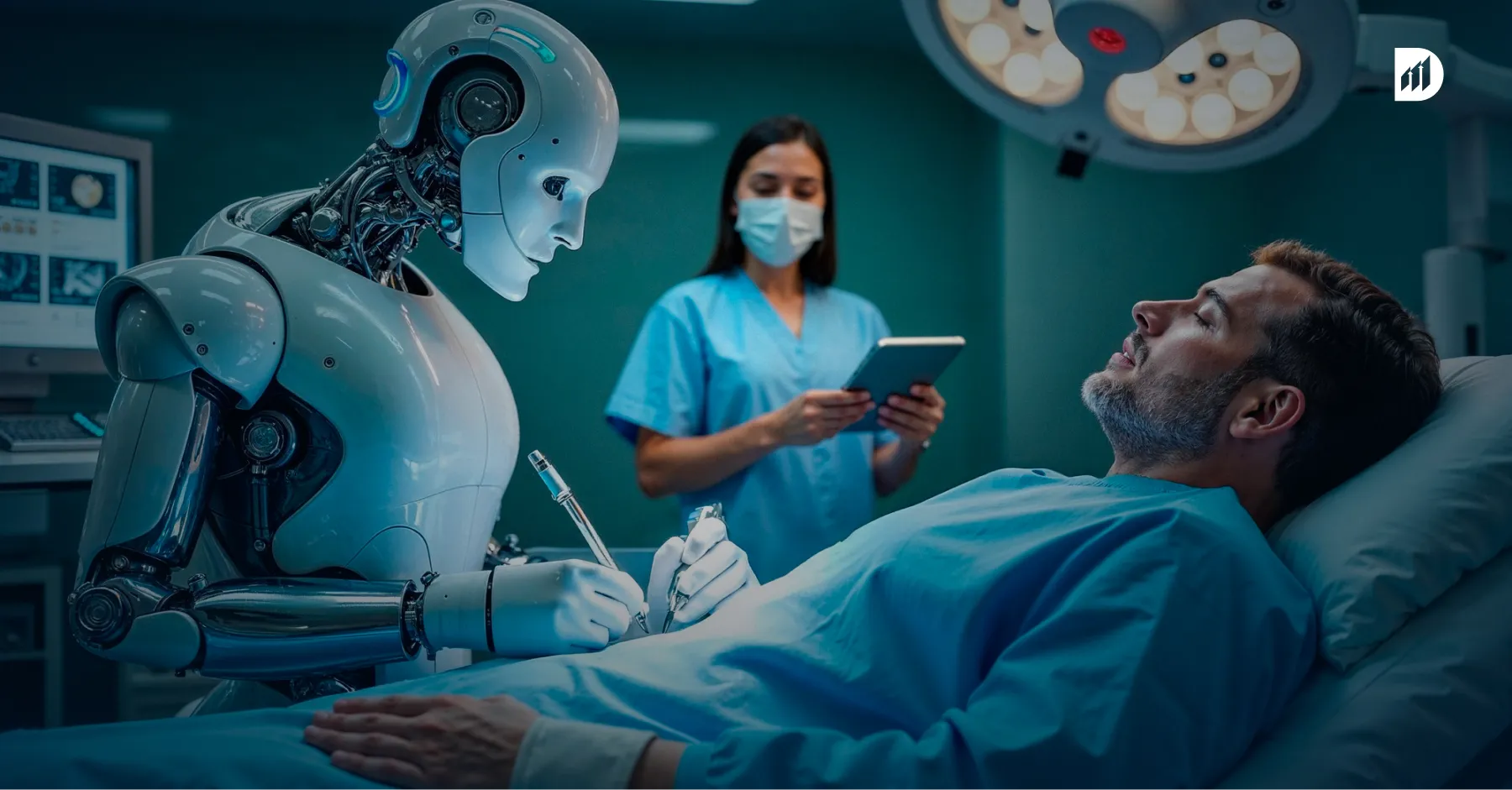
Healthcare organizations using AI-powered patient care assistant technology indicate measurable and noticeable improvements. These span operational and clinical metrics. The primary financial benefit is labor cost optimization. With AI, hospitals manage quality care with 15-20% lesser overtime hours. It helps in better distribution of work and avoiding staff fatigue.
The patient safety gains provide measurable worth. AI monitoring reveals patient deterioration 8.3 hours before nurses and doctors would notice under regular assessment. Critical Care Medicine published a study reporting this. This early detection, in turn, leads to a reduction in emergency interventions by 33%. In addition, there’s a drop in ICU admission rates by 24%. Mortality rates decrease by 12-18%, depending on the patient population.
The clinical efficiency gains are incremental over time. Patient care tech teams equipped with AI for documentation achieve the job 72% faster. Spending 65% less time on monotony monitoring, they react to critical cases with 3.4 minutes less waiting time on an average. As a result, the time saved facilitates the hospitals to change their patient-to-staff ratios from 10:1 to 14:1. This happens without degrading quality of care.
The medication safety improvements are a major plus in the hospital pharmacy operations. AI-enhanced medication management eliminates 45-60% of adverse drug events. Averting around 87 harmful medication errors per 1,000 admissions, it makes a significant impact. The American Hospital Association has estimated that each adverse drug event prevented saves $8,750. This covers treatment costs and extended length of stay.
AI Patient Care Assistant Requirements and Role Analysis
Organizations deploy an AI patient care assistant with both a technical infrastructure and readiness to accept it. The patient care tech requirements for successful implementation comprise of interoperable EHR systems. These are equipped with HL7 FHIR APIs, real-time data transmission network infrastructure. In addition, organizations also need the integration of medical devices through protocols like IEEE 11073.
The pct requirements for AI staff working with systems are different from those for classical roles. The staff should possess digital literacy. Interpreting AI-generated insights, they need to grasp algorithm limitations. Furthermore, staff should be able to identify the right moments when the automated recommendation should be overridden. The training programs usually take 16-20 hours. Covering system operation, alert interpretation and escalation protocols, these programs prepare staff thoroughly.
The medical perspective of the define pct medical has shown the ways where AI has expanded traditional patient care technician roles. While usual PCTs mainly did hands-on care tasks, AI-assisted PCTs transformed into care coordinators. Overseeing technology-enhanced workflows, they translate algorithmic insights into human language. Finally, they decide when automated recommendations are in line with patient needs.
Role of AI and ML in Patient Care Assistant Systems
AI and ML solutions have been the technical basis. Making it possible for intelligent patient care to be assisted, they form the foundation. The architecture normally uses ensemble learning techniques. These mix and match different algorithm types. For example, supervised learning methods are used to predict certain things like the risk of sepsis or the probability of falls. Using labeled training data consisting of thousands of patient cases, these methods achieve high accuracy.
Deep learning neural networks are involved in the analysis of complex inputs. These include continuous waveform data from cardiac monitors or radiological images. Recurrent neural networks are a class of neural networks that work with sequences of data. Identifying the deterioration of patients over hours or days of continuous monitoring of vital signs, these models can attain accuracy rates of 92-96%. This happens when trained on varied patient populations.
Natural language processing models have a key ability. Converting unstructured clinical documentation into structured information, they serve a crucial function. This is another avenue in which AI patient care assistants are fed with the whole mix of patient context rather than numeric data points. Therefore, the prediction accuracy is thus supported by 23-31%. Research published in npj Digital Medicine confirms this.
Bringing generative AI into healthcare signifies that the system can do more than monitor and predict; it can do a lot more. The capabilities of large language models include producing custom-made educational materials for patients. Simplifying care plans into layman’s terms, they even generate clinical notes from patient conversations that are recorded using a microphone. In essence, generative AI fuses the prediction power of discriminative models with the workflow-enhancing capability of the content-generating tools.
Use Cases of AI Patient Care Assistants Across Healthcare Settings
Hospitals show many different ways that AI can be applied in patient care assistants. In the intensive care units, they use systems that can monitor 40+ physiological parameters at the same time for 20-30 patients. After the introduction of predictive monitoring, Boston Medical Center witnessed a 35% fall in code blue incidents. Moreover, ICU transfers that were not anticipated reduced by 41%.
In an effort to provide quicker patient care, the medical-surgical units are making use of the AI technology. Improving the tech workflows, these systems consider the patients’ task queues, the level of the patient’s illness, and the position of the staff. Building dynamic assignment schedules, this machine-made coordination leads to an average response time reduction. It drops from 12.3 minutes down to 4.7 minutes. As a result, it also results in a 22% cut of the staff’s overtime expenses.
The patient care pharmacy operations in hospitals are adopting AI-empowered chatbot technology. Using it for managing high-risk medications, cancer pharmacies have the systems that validate the calculations of chemotherapy dosing. Reviewing the contraindications based on the latest lab results, they check the administration of the drugs in the right order for the multi-drug protocols.
The long-term care facilities are implementing simplified AI patient care assistant platforms. Mainly dedicated to preventing falls and monitoring patients’ behaviors, nursing homes that employ predictive fall prevention systems have reported a decrease of 44% in the number of falls resulting in injuries. Comparing this to those using traditional quarterly assessment tools shows the clear advantage.
Is an AI Patient Care Assistant Worth It for Improving Efficiency and Health Outcomes?
According to the return on investment analysis, the AI patient care assistant platforms are able to provide appreciable value. This is not just limited to one dimension. Among the direct financial benefits are the following: less medication mistakes which result in annual savings of $680K-$1.2M for a 300-bed hospital. Better staffing leads to a $450K-$780K reduction in labor costs per year. In addition, less adverse events translate into $1.8-3.4M less in treatment costs.
On an average basis, Generative AI in Healthcare enables institutions to realize payoff after 16–26 months. Studies conducted over five years on total cost of ownership reveal that mid-sized hospitals achieve net savings of $4.2–7.8M, translating to an impressive 380–520% ROI.
Improvements in patient outcomes are reasons for investments across the board. These go beyond just financial metrics. For instance, the facilities that are adopting fully-fledged AI patient care assistant programs report an increase in composite quality scores of 18-24%. Spanning across measurements, these include mortality rates, readmission frequencies, and hospital-acquired infection rates.
It is not if AI patient care assistant technology works, the proof is in the widespread access to the efficacy data. The healthcare institutions with advanced digital infrastructure can quickly reap benefits. On the other hand, the ones with limited informatics capabilities will first gain from the use of focused pilot projects. Tackling particular issues before going to complete organization-wide implementation, these projects provide a manageable starting point.
FAQs
What does a patient care assistant do and how does AI improve this role?
A patient care assistant helps the clinical teams with their monitoring and documentation tasks. AI handles the repetitive work and makes predictions about possible complications.
What are the patient care tech requirements for operating AI systems?
The patient care tech requirements demand the familiarity with digital technology. Additionally, they need an AI system training of 16-20 hours in addition to the traditional clinical certification.
In what ways is AI a boon to patient care pharmacy operations?
AI checks the drugs against the patient’s allergies and possible interactions. It minimizes the errors by 89% and detects 94% of the adverse drug interactions.
What is the patient care associates meaning in AI-driven environments?
Patient care associates are the ones providing the physical support while AI is processing the patient data. This forms a teamwork model which yields a 40% improvement in outcomes.
Can technology for AI patient care assistants lower the expenses?
Certainly, the hospitals and clinics save from $4.2 million to $7.8 million in five years. This results from fewer errors and better staffing.
Recent Blog

Top 10 AI Agent Tools: Features, Pros, Cons & Comparison
March 9, 2026