AI as an HR Business Partner: Redefining the Future of Human Resources
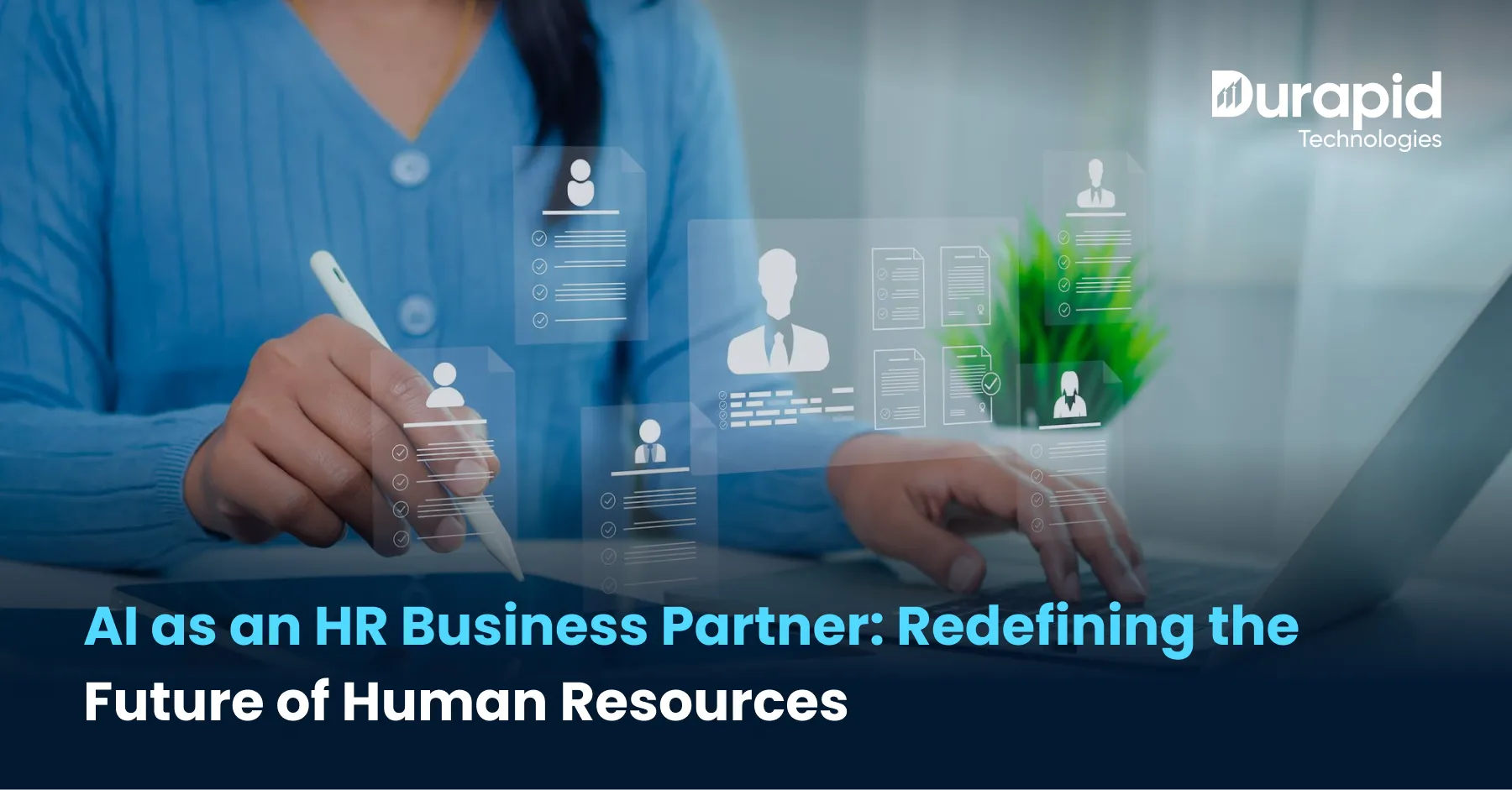
The resignation of your best engineering manager is a surprise. The exit interview shows that the manager considered herself overworked and unappreciated for six months. Your annual engagement survey gave her a “very satisfied” rating only three months ago.
Meanwhile, your recruiting team screened 427 applications for a key data scientist position last week. They spent 62 hours on manual evaluations. They chose 8 people for the final round. Out of those, 5 did not accept your offer. The total expense? $18,000 for the recruiter and an extra 45 days for the postponed project.
Now, picture if AI had caught that manager’s disinterest 90 days sooner. It could analyze her Slack messages and meeting patterns for sentiment. At the same time, it would screen those 427 applications in 90 minutes with 94% accuracy for job fit prediction.
Modern HRBPs don’t just put out fires anymore, they spot patterns early. Deloitte’s 2024 Human Capital Trends report highlights that companies using AI-driven HR analytics see 41% lower turnover and hire 38 days faster. Now layer in an AI Powered Chatbot and the day-to-day shifts too. It handles repeat employee queries, supports onboarding, and captures sentiment in real time, so HRBPs can stay focused on workforce strategy instead of admin chaos.
Differentiating Features of AI-Powered HR Business Partner over Traditional HR Operations
The HR Business Partner serves as a crucial connecting point between HR management and the company’s goals. The traditional HR Business Partner approach relied on frequent reporting, a survey once a year, and turning problems into opportunities through proactive methods. However, the introduction of AI has changed the situation radically.
The contemporary HR Business Partner function embraces real-time predictive analytics engines. These engines analyze employee data concerning hiring, performance, engagement, and attrition concurrently. AI-driven systems give a signal about an employee’s contemplating leaving 60 to 180 days before the decision to quit. This happens at the time of exit interviews.
Organizations take advantage of predictive attrition models. In fact, McKinsey’s research shows they manage to reduce the rate of unpopular quits by 25%. As a result, they save $3.2M in labor costs for replacement every year in the case of medium-sized companies.
Here is the technological distinction: Classic HR depends on trailing indicators—metrics that inform you about what has already occurred. In contrast, AI-fueled HR as a visionary business partner employs leading indicators. The machine learning models scrutinize the patterns across more than 40 data points. These include performance ratings, peer feedback sentiment, timing for promotions, compensation levels, and even calendar usage patterns. They foresee future outcomes before they take place.
How AI Transforms Talent Acquisition for the HR Business Partner Model
Talent acquisition is responsible for 35% of an HR Business Partner’s time according to SHRM data. Fortunately, AI reduces this significantly. It has been set up with a system comprising of resume parsing and smart candidate ranking which works all by itself.
AI-based Resume Parsing and Skills Detection
The AI that processes resumes can really quickly extract from various unstructured formats skills, work experience, certificates and degrees.
Natural language processing models work based on frameworks such as spaCy or Azure Cognitive Services. These models are able to not only detect obvious skills but also to imply certain competencies. Basically, they rely on project descriptions and role histories. If a resume says “led cloud migration for 200-user SaaS platform”, it would be labeled with skills such as Azure, AWS, and DevOps, as well as project management. Curiously enough, these tags might be missed by a human recruiter.
Impact on Screening Time and Quality of Hire
Automated candidate shortlisting has resulted in a significant reduction. Screening time dropped by 89% along with a 23% uplift in quality-of-hire scores. Job-candidate fit scoring uses gradient boosting algorithms. Essentially, these algorithms have been trained on historical hiring data and can thus predict the success of candidates for specified roles.
The technical skill matches, cultural alignment indicators obtained from writing samples, and career trajectory patterns are all subject to analysis by these models. As an example, one of the financial services firms applying this method has experienced a notable increase. The retention rate of new hires over the course of a year jumped from 78% to 91%.
AI-Powered Interview Analysis and Bias Detection
AI-powered interview analysis is yet another factor to consider. Speech recognition tools provide live transcripts of the interviews. Meanwhile, sentiment analysis models determine the levels of confidence, clarity, and the exhibiting of skills by the candidates.
The generative AI tools are among the most advanced in the market for analyzing interviewer questions for bias patterns. Specifically, they point out the instances when female candidates are asked more personal questions than their male counterparts who receive more technical queries. The bias detection was instrumental in reducing the incidence of discriminatory hiring practices by 67%. This happened during pilot programs conducted at more than 200 companies.
AI-Driven HR Business Partner Strategies for Workforce Planning and Capacity Optimization
The HR Business Partner model has ever faced challenges regarding the precise prediction of headcount. The professional way of thinking might cause troubles in the planning process. Especially, this occurs if they have to manage multiple locations, skill groups, and business situations simultaneously.
AI-driven workforce planning models integrate past hiring data, project pipeline information, revenue forecasts, and market conditions into their computation. They estimate demand for headcount by role and geography. Time-series forecasting algorithms are capable of recognizing seasonal trends. For instance, retail needs 40% more customer service agents in anticipation of Q4. Similarly, tax firms hire 55% additional accountants from January through April.
The analysis of skill demand and supply has determined the critical gaps before having an impact on the operations. Basically, machine learning models analyze the current capabilities of the workforce. They compare these to the projected needs of the projects in the next 12-24 months.
A technology company has revealed that the demand for data engineering would be 23% greater than the company’s capacity in 9 months. Obviously, it is already hiring and training in advance rather than delaying projects.
Bench Cost Optimization
A bench cost optimization results in a very large concealed cost. Organizations waste an average of $127 per hour on the capacity of employees who sit idle between projects. AI helps to minimize the time taken by the company to fill the available positions by 34%. Consequently, it saves $2.1M every year for a professional services firm that has 500 employees.
Scenarios related to the workforce can now be planned in large numbers. Basically, HR Business Partners will be able to devise various futures. For example, a scenario of 15% growth, an economic slowdown demanding 20% layoffs, or a scenario of new market expansions. Ultimately, they will understand the workforce implications for each path within hours instead of weeks of manual analysis.
AI-Powered HR Business Partner Analytics for Predicting and Preventing Attrition
The cost of employee turnover is 1.5x to 2x an employee’s annual salary for the organization. Clearly, this accounts for recruitment, training, and lost productivity. Therefore, identification of early attrition risk provides the highest ROI of any HR AI application.
Attrition Prediction Models and Risk Factors
Machine learning models examine over 50 different factors and produce individual churn probability scores. Among the main risk indicators are: the decline of peer collaboration, the decrease of meeting participation, the taking of professional development opportunities, the compensation rate being below market rate, and the manager’s effectiveness being rated low.
Notably, the first one is measured through email and Slack network analysis. The models have been able to predict employee departures with an accuracy of 78-84% up to 90-180 days in advance.
Understanding Why Employees Leave
The analysis of causes of attrition can explain people leaving. Obviously, the reasons vary greatly with role, tenure, and team. The data scientists are the ones quitting because of poor access to tools and slow project cycles. On the other hand, the salespeople’s leaving connects to the problems of compensation structure and territory changes. Meanwhile, the frontline managers are leaving because of burnout and lack of career progression. Fortunately, AI is doing the segmentation of these patterns automatically.
The insights into attrition by manager and by team reveal systemic issues. When three teams under the same director have 40% higher attrition than the average in the company, it is not just a matter of random bad luck. Obviously, it is a leadership problem requiring intervention. AI identifies these clusters and measures their economic impact.
Personalized Retention Interventions
AI-recommended actions for retention tailor the interventions. A top engineer displaying signs of disengagement may be offered a list of learning opportunities, a change of project, or review of his/her salary. Likewise, this has been done in case of similar interventions for great sales rep experiencing the loss of his/her spark. The intervention might extend even to the extent of a coach working with him/her adjusting schedules. Obviously, giving all workers the same treatment through the application of standard retention programs is a total waste. In contrast, the personalized, and data-driven style of intervention is a winning strategy.
HR Business Partner Role in Continuous Performance Management and Development
The annual performance review is a total of 83% failure with the rest (17%) being scored by managers and employees. Clearly, this is according to Gallup whom claims to have unearthed the sad truth about the matter. Fortunately, the implementation of AI goes a long way into making the performance monitoring continuous. In fact, even tech-wise it will eventually kill the annual performance review cycle.
Real-Time OKR and KPI Tracking
Artificial Intelligence is great when it comes to setting and monitoring Objectives and Key Results (OKR) and Key Performance Indicators (KPI). It can provide a direct view on how the goal is progressing. To put it simply, the HR Business Partners are now receiving weekly insights instead of receiving feedback sessions every three months. They are able to observe the one who is about to achieve the targets, the one who is falling behind, and the obstacles that are causing the delay in getting the results.
Obviously, productivity analytics by job role, department, and individual project highlight where organizations may be putting in too much or too little resources. The workforce for the work done being so critical needs proper allocation.
Detecting Burnout Before It’s Too Late
Burnout and overload detection monitors calendar activity, after-hours email usage, PTO (Paid Time Off) taking and teamwork. Specifically, people whose work weeks total to more than 55 hours face risks. Those who also have only about 8 hours per day allotted for concentration are 3.2 times more likely to leave and 34% less productive. Fortunately, Artificial Intelligence spots such trends before they lead to employee turnover or loss of productivity.
Manager effectiveness measurement scores leadership quality. Essentially, it combines 360-degree feedback, sentiment analysis, performance metrics of the team, and attrition rates. The worst managers ruin productivity in the team. In fact, they are responsible for 60% of the attrition that is preventable. Using data for performance evaluations removes recency bias and subjective judgments from the reviews.
Building Organizational Skill Graphs
Creating an employee skill graph enables the detecting of organizational capabilities at very granular levels. Basically, skills graphs do not only represent the knowledge of employees. They also show the way that knowledge flows among the teams and where the gaps in expertise are. These gaps may affect the delivery of the project. The identification of skill gaps at individual and organizational levels has a positive impact. As a result, personalized learning as well as upskilling recommendations are facilitated by GenAI HR Assistant technologies.
Why AI-Powered HR Chatbots and Automation Matter for HR Business Partners
HR Business Partners spend 40% of their time responding to employee inquiries. These relate to policies, leave balances, benefits, and processes. Fortunately, the use of AI-powered chatbots eliminates the entire administrative workload associated with answering these questions.
Today’s HR chatbots utilize the Azure OpenAI or AWS Bedrock platforms. Without requiring any human intervention, they can handle 85% of the routine queries. Employees who ask about PTO balances, tax form locations, referral bonuses, or insurance coverage options get immediate and accurate responses. The systems are integrated with HRIS applications such as Workday, SAP SuccessFactors, and BambooHR for accessing data in real-time.
Automating Leave Management and Policy Compliance
The use of automation for attendance, leave, and policy has resulted in a great reduction of HR support tickets, by 72%. Employees are using chatbots to make their time-off requests. The system automatically checks whether coverage of the team is adequate. It verifies whether workflows involving manager approval have been followed, and whether there are sufficient PTO balances.
The process of creating employment agreements has been made faster thanks to offer letter and contract document automation. The system can create customized agreements in just a few minutes. It works based on role templates, compensation data, and labor regulations specific to the location.
Payroll Error Detection
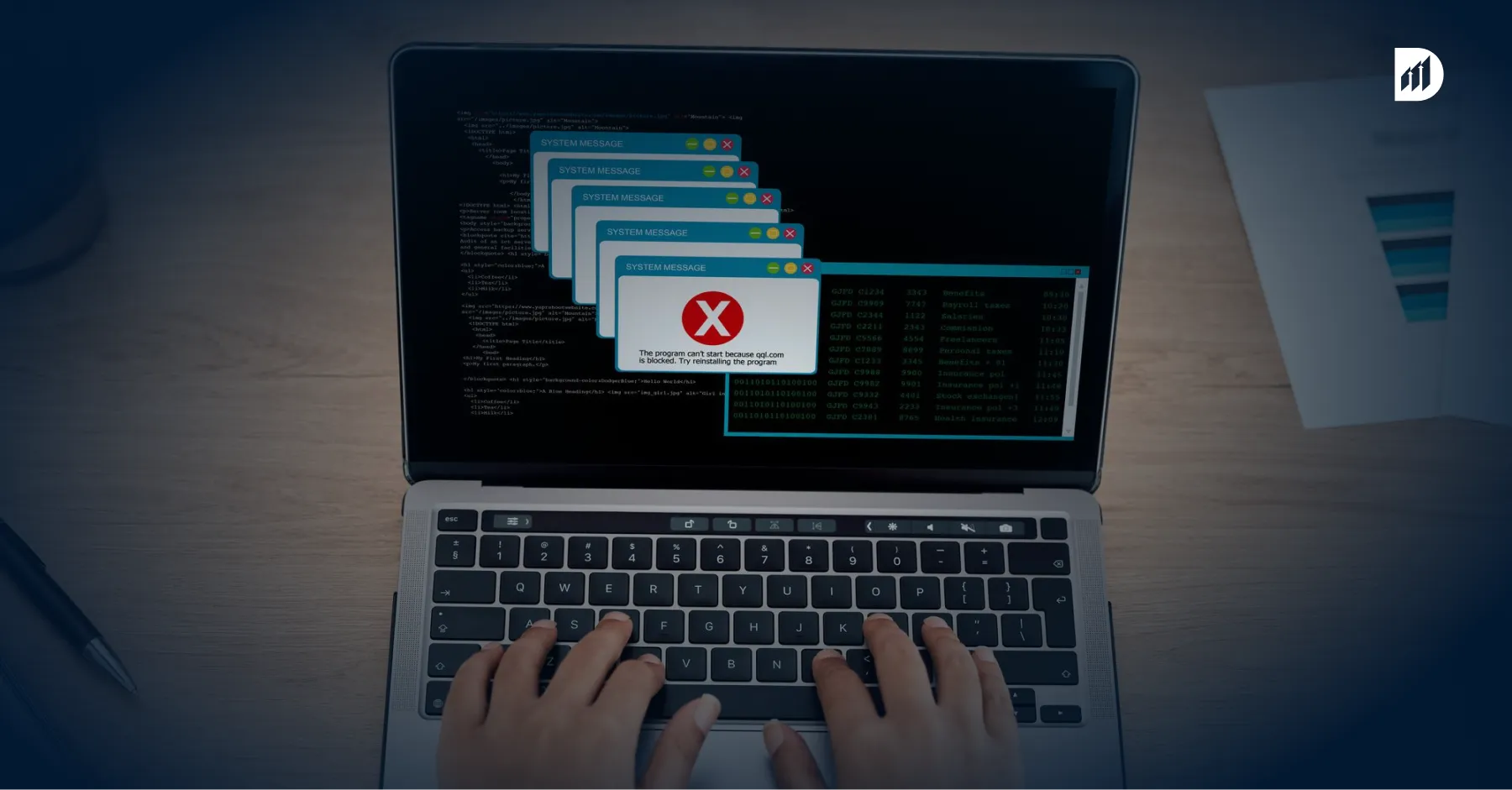
Identifying discrepancies and anomalies in payroll prevents errors from being revealed to employees. Unusual pattern recognition is done by machine learning models thus detecting anomalies. The cases are such as a 40% increment in salary with no promotion records, double payments, or wrongly classified overtime. These detections keep the company safe from expensive adjustments and violations of compliance.
Compliance reminders and alerts are sent to HR Business Partners about upcoming deadlines. These include training renewals or regulatory changes that affect specific employee groups.
Ensuring fairness, compliance, and risk management in the HR business partner model
Detection of bias in promotions and compensation is one of the most significant applications of AI in the HR Business Partner landscape. The algorithms scrutinize the promotion trends among different demographics. They point out when the rates of promotion for equally qualified employees start to differ by gender, ethnicity, or age.
A tech company came across a matter of gender bias. Women had to wait 18 months longer than men with identical performance ratings for promotions. This is a case that was not visible without the use of an algorithm-based analysis.
Pay Equity Analysis
Pay equity and compensation fairness analysis scrutinizes simultaneously thousands of salary decisions. Statistical models take into account legitimate differentiators. These include experience, education, performance, and location. Then they identify unexplained differences. Companies applying these tools eliminate gender wage disparities 3.5x more quickly. This compares to those depending on manual audits.
Diversity and inclusion metrics monitoring goes on from simply measuring hiring categories. AI evaluates inclusiveness through various ways. These include participation patterns, speaking time in meetings, idea attribution, and promotion of people from different demographic groups.
Regulatory Compliance and Audit Readiness
Labor law and policy compliance monitoring differs with the jurisdiction. AI systems constantly monitor and report in real-time 50-state employment regulations in the US. They also track GDPR requirements in Europe, and local labor codes across the whole company.
Audit-ready HR analytics and reporting prepares the required documentation automatically. This is for regulatory reviews, litigation defense, or compliance certifications. Enterprise HR risk exposure analysis determines and quantifies potential liabilities. These come from wage-hour violations, classification errors, or discriminatory patterns before they cause legal action to be triggered.
When AI-Powered HR Business Partner Solutions Produce the Most Impact
The highest ROI for AI-powered HR Business Partner capabilities can be seen in organizations with over 500 employees. Smaller firms are not able to provide enough data volume for accurate machine learning models.
Companies that are expanding by at least 15% annually have needs. Those with multiple locations at the same time immediately perceive the need for workforce planning and capacity optimization features.
The most regulated industries like financial services, healthcare, and government contractors reap the most benefits. They gain from the implemented bias detection and audit-ready analytics. The companies with technical workforces not only create skilled graphs and internal matching in careers. They also gain more as those roles have clearly defined and measurable competencies.
The debate between HR manager and HR Business Partner is an important one. HR managers stick to the rules and cater to the needs of departments and employees. HR Business Partners on their part do strategic workforce planning and issue resolution. This in turn is aligned with business objectives.
AI greatly supports both roles. However, the transformation is greater in the case of the HR Business Partner role. It removes the need for reactive problem-solving and allows us to start with predictive strategy.
Implementing AI for HR Business Partners: Technical Considerations and Platform Choices
In order to successfully integrate the AI, it is essential to go right across the different systems. These include HRIS, payroll platforms, performance management tools, and collaboration software. Azure Machine Learning and Databricks are the two companies that give the necessary enterprise-grade infrastructures to create custom models.
The use of pre-built solutions such as Workday Peakon for engagement analytics or Eightfold AI for talent intelligence has the double benefit. It accelerates deployment as well as providing the satisfaction of using traditions.
Data Quality Requirements
The data that will be used for training the models will be the one that will set the accuracy of the models. There should be proper and consistent job titles, standardized performance ratings, and complete tenure histories. The organizations will have clean and structured employee records. Dirty data will lead to incorrect predictions and untrustworthy insights. The case of the Generative AI in healthcare is one of the similar dependencies of the data quality for the clinical AI applications.
Change Management and Training
HR, made, business, partners, and change management proved that selection of technology is not the only one critical factor. They need training for interpreting model outputs, explaining predictions to managers, and AI recommendations designing interventions. Organizations that realize full value from HR AI invest 6-8 weeks. They put this time into training and pilot programs before the rollout across the enterprise.
Privacy and Ethics
The use of AI must be governed by privacy and ethics frameworks. Employees have the right to know what data is collected by the organization. They should know how AI processes it, and to what extent the predictions made influence the decisions. The European GDPR imposes a requirement for obtaining explicit consent. This is for decisions taken by humans and machines jointly.
Nevertheless, in the absence of such legal requirements, employee trust and acceptance are still created through transparent AI governance.
The Business Impact: How AI Transforms HR Business Partners from Cost Centers to Strategic Functions
The AI-assisted HR Business Partners result in notable financial gains across six aspects. The total savings of $840K in annual hiring costs for a 2,000-person organization are derived from better quality of hires and shorter time to fill. Additionally, the predictive measures taken to lower attrition prevent incurring $3.2M cost for replacement. The employees performing at the best, shaped by the smart allocation of the workforce, add $1.8M in production. They do this without hiring more people.
A better employee experience and higher engagement bring about 12-15% productivity increase. They also bring 31% absenteeism drop. Stronger compliance and governance measures save the organization from incurring expensive violations. Settlements for wage-hour disputes are on average $1.2M. Discrimination lawsuits cost $160K even when settled before reaching trial. These are not hypothetical savings but rather documented results. They come from organizations that have implemented AI-supported HR analytics.
The change from a cost center to a strategic function is the transformation that yields the highest value. CFOs value traditional HR mainly through the cost per hire and HR headcount ratios. In contrast, AI-backed HR Business Partners present to the management their return on investment. They show the reduced revenue at risk from talent shortages, the faster time-to-productivity for new hires, and the workforce capacity appropriately aligned with the business strategy.
This change allows HR to engage in discussions about investment allocation rather than justifying expenses.
The organizations that are using the whole AI capabilities are making 56% faster decisions strategically. Their revenue per employee has increased by 23% within 18 months. These results elevate HR to a status of a strategic business partner. They provide an advantage over the competition through excellent talent operations.
The most common questions concerning AI-powered HR Business Partners
What distinguishes an HR Manager from an HR Business Partner?
HR Managers take care of the transactional processes. These include payroll, administering benefits, and compliance with policies. On the other hand, HR Business Partners use data-driven talent planning, predictive analytics, and organizational development. They synchronize the workforce strategy with the business goals.
In what way does AI fortify the HR Business Partner role?
AI allows HR Business Partners to forecast employee turnover 90-180 days in advance. It shortens the hiring process by 38 days. Moreover, it spots skill deficits before they affect projects. This turns reactive HR into proactive workforce strategy.
Will AI eventually take over the roles of HR Business Partners?
The answer is no. AI enhances HR Business Partners’ capabilities by conducting data analysis and performing routine tasks. However, strategic organizational decisions regarding culture, management development, and change will still be the human’s area of skill and judgment.
What software do AI-powered HR Business Partners use?
Typical software includes Azure Machine Learning for custom models. It also includes Workday Peakon for engagement analytics, Eightfold AI for talent intelligence, and GenAI Interview Evaluator systems for candidate assessment.
What is the level of accuracy of AI in forecasting employee attrition?
The top models for predicting attrition are able to reach 78-84% accuracy. They consider more than 50 variables. These include performance trends, compensation benchmarks, manager effectiveness, and collaboration patterns within 90-180 day periods.

Deepesh Jain
Recent Blog